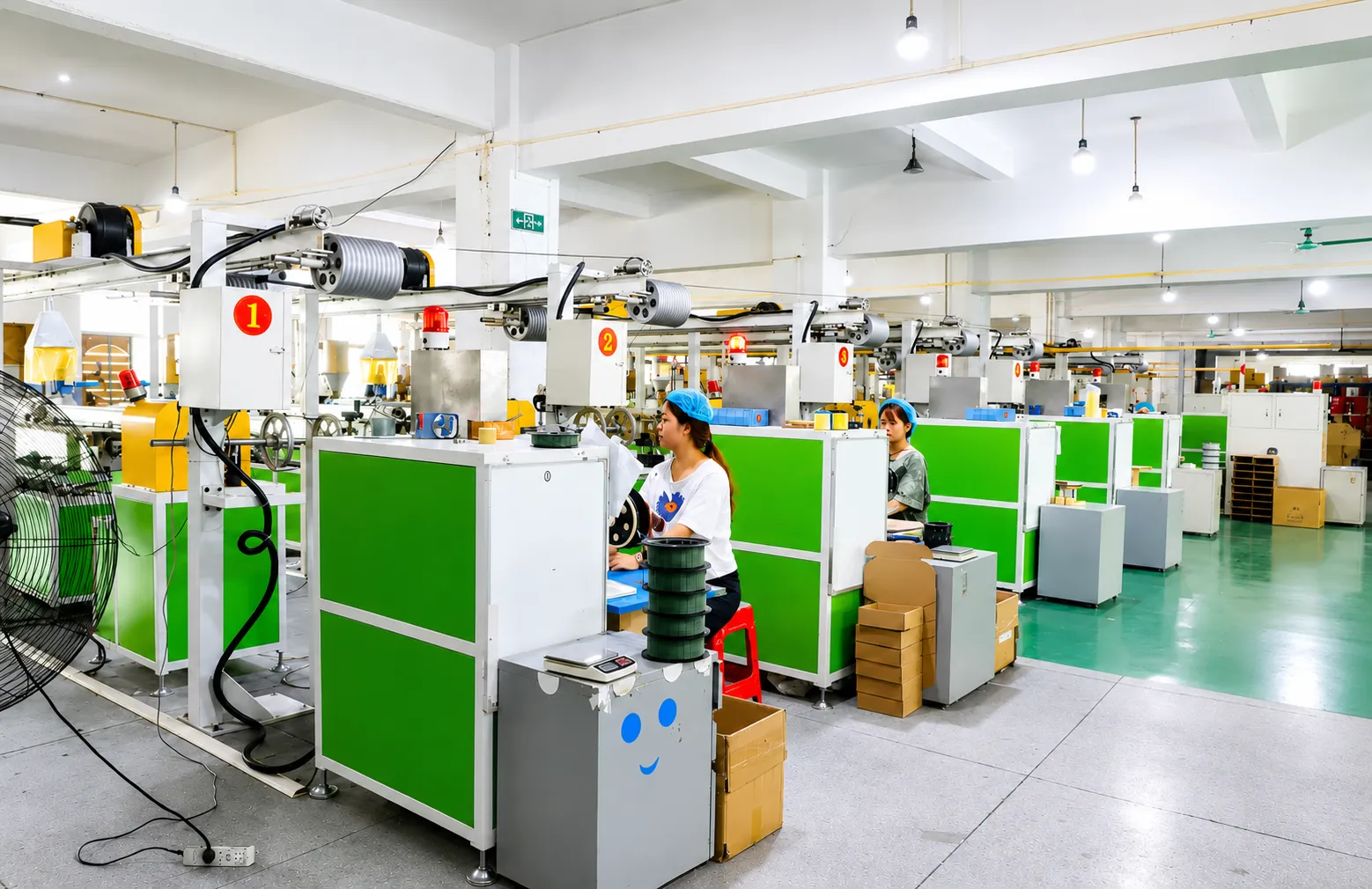
This factory-direct filament guide focuses on one question: when does buying from a manufacturer become cheaper after freight, duty, MOQ, storage, and print-failure risk are included? Use the landed-cost method below before switching from a distributor to direct OEM filament sourcing.
As more filament buyers scale beyond trial orders, many start asking whether they should continue buying from local distributors or move directly to a factory. At Felarus, we have seen more customers transition from distributor purchasing to direct factory sourcing as their monthly volume, product range, and private-label needs become more predictable. This article explains when direct sourcing works, when it does not, and how to calculate the true landed cost before making the switch.
Why More Buyers Are Purchasing Directly from Manufacturers
The move toward direct manufacturer purchasing is part of a broader change in the 3D printing materials market. Buyers are becoming more professional, more data-driven, and more aware of how supply stability affects profit. A small print farm may begin by buying a few spools locally. Once it is running dozens of machines every day, the business starts caring about batch consistency, lead-time planning, pallet quantities, color availability, and long-term supply.
The same pattern appears among Amazon sellers, local distributors, e-commerce stores, and private-label filament brands. They want more control over the product, not just a lower invoice number. Direct purchasing can support better inventory planning, more material choices, custom color development, private-label packaging, and direct technical support from the people who actually make the filament.
This does not mean every buyer should skip distributors. Distributors still offer fast local delivery, smaller quantities, flexible cash flow, and convenient returns. But as a buyer grows, the value of direct production access becomes more visible. A local distributor sells what is already available. A manufacturer can help plan what should be produced next.
Purchasing Priorities
Why Buyers Choose Factory Direct
Common purchasing priorities observed across B2B buyers.
Is Factory Pricing Really Lower?
Many sourcing discussions stop too early. They compare one number from a factory quotation with one number from a distributor catalog. That comparison is incomplete. A factory price is only the starting point. The number that matters is the real landed cost after the product has arrived, cleared customs, entered storage, and become ready for sale or use.
For filament importers, landed cost may include ocean freight, insurance, import duty, VAT or local tax, customs clearance, inspection, local delivery, warehouse handling, bank fees, packaging changes, and inventory carrying cost. If the order is delayed or a color does not match the approved sample, the cost is even higher because time and lost sales become part of the equation.
That is why experienced buyers do not ask only, "What is the factory price per spool?" They ask, "What is the total supply-chain cost per sellable spool after delivery?" This is also why Felarus often helps first-time importers think through logistics, packaging, color confirmation, and inventory planning before mass production begins. The goal is not to make the quotation look simple. The goal is to make the business decision realistic.
Landed Cost Map
Understanding the True Landed Cost of Factory Direct Purchasing
Factory price is only the first line in a complete sourcing calculation.
Factory price
The quoted manufacturing cost before export and logistics.
Freight and insurance
Ocean freight, cargo insurance, and shipment-related charges.
Import tax and customs
Duty, VAT or local tax, customs clearance, and documentation.
Local delivery and warehouse
Domestic transport, receiving, storage, handling, and inspection.
Inventory cost
Cash tied up in stock until each spool or carton is sold or used.
Real landed cost
The final cost per sellable spool or kilogram after all steps are included.
Once all these elements are included, direct purchasing may still be cheaper, especially for larger and more predictable orders. But for small quantities, urgent needs, or buyers without import experience, a distributor can sometimes be more efficient. The smartest decision depends on order volume, cash-flow tolerance, inventory planning, and the buyer's ability to manage international logistics.
Cost Planning
Factory-Direct Cost Calculator
Use this section to check whether a lower factory quote still saves money after freight, import work, inventory pressure, and print-failure risk are included.
| Cost item | How to calculate it | Why it matters |
|---|---|---|
| Factory unit price | Quoted material price x order weight | Shows the starting saving, but not the final landed cost. |
| Freight and insurance | Shipment cost / total kg | Small air shipments can erase the factory price advantage. |
| Import duty and customs | Duty rate + broker fee + local taxes | These costs vary by destination and product classification. |
| Inventory carrying cost | Monthly stock value x storage or financing cost | Large orders save per kg but tie up more cash. |
| Failure reserve | Expected waste rate x material and labor cost | Cheap material is expensive if print success rate drops. |
If your main question is where to buy lower-cost filament across Amazon, distributors, B2B platforms, and factories, compare those channels in our affordable filament buying guide.
When Buying Direct Actually Saves Money
Factory-direct sourcing usually becomes more attractive when purchase volume is consistent enough to offset freight, customs, and inventory costs. A print farm using a few dozen kilograms per month may not need direct factory purchasing. A print farm using hundreds of kilograms per month may begin to benefit from bulk planning, color consistency, and direct technical communication.
For wholesalers and distributors, the case is stronger. They are not only buying filament for internal use; they are building stock, serving customers, and protecting margin. Direct sourcing from China can help them plan container-level shipments, build a wider product range, and develop exclusive colors or packaging. For private-label brands, factory purchasing is often essential because OEM packaging, custom labels, barcode systems, retail boxes, and color development must be controlled at the production level.
Many Felarus OEM customers begin seeing meaningful cost and supply-chain advantages once their purchasing reaches pallet or container-level planning. The advantage is not only lower production cost. It is the ability to align materials, packaging, lead time, and future replenishment around a real business plan.
Volume Guidance
Best Purchasing Method by Volume
Use volume as a planning signal, then confirm the final method by cash flow, lead time, and inventory capacity.
100 kg
Distributor supply is usually more flexible for small or urgent needs.
500 kg
Mixed sourcing can balance local speed with early factory testing.
1,000 kg
Factory purchasing may become practical when demand is repeatable.
5,000 kg
OEM programs can support branded packaging and planned replenishment.
20FT container
Direct manufacturing is usually best for stable, container-level planning.
If your business is still testing demand, start with a sample evaluation or small trial order. If your sales are predictable and your product roadmap is expanding, direct manufacturing becomes a strategic option worth evaluating.
Hidden Costs Buyers Often Forget
Many buyers focus heavily on price and overlook the costs that slowly reduce margin. Quality inconsistency is one of the biggest examples. If a filament batch creates customer complaints, failed prints, or returns, the initial saving disappears quickly. Production delays can also become expensive when a seller runs out of stock during a high-demand period.
Other hidden costs include color matching, payment terms, inventory pressure, minimum order quantity, cash flow, communication time, time-zone delays, shipping risk, and the cost of inspecting goods before they leave the factory. These factors are difficult to see on a quotation sheet, but they are real business costs.
At Felarus, we frequently help first-time importers estimate not only manufacturing cost but also logistics, packaging, color cards, label requirements, and inventory planning before mass production. This kind of preparation reduces surprises. It also helps buyers decide whether they should use distributor supply, mixed sourcing, or a direct OEM program.
The key concept is total supply-chain cost. A slightly higher unit price from a stable supplier may be better than a lower price that creates delays, inconsistent color, poor winding, damaged packaging, or weak after-sales support. For a deeper look at supplier evaluation, read our guide on how to evaluate a reliable 3D printer filament manufacturer.
What Changes Inside Your Business After Switching Direct
Direct sourcing is not only a purchasing change. It changes how a buyer plans inventory, product launches, and customer service. Instead of placing last-minute orders whenever stock runs low, the buyer needs a rolling forecast. The purchasing team must estimate which colors, materials, and spool formats will sell over the next production cycle. The sales team must understand lead times. The warehouse team must make space for larger inbound shipments. The finance team must be comfortable with a bigger order value and longer cash cycle.
This is why the best factory-direct relationships are usually planned, not rushed. A buyer may start with core materials such as PLA+, PETG, or Matte PLA, then add OEM packaging, custom colors, or specialty materials after sales patterns become clearer. Felarus often sees customers grow in this sequence: sample testing, trial order, recurring bulk order, private-label packaging, then custom product development. Each step reduces uncertainty and creates a stronger knowledge base for the next order.
The operational benefit can be significant. When the factory understands your preferred colors, carton labels, packaging language, pallet requirements, and shipping rhythm, repeat orders become smoother. This is where direct manufacturing becomes more than a cheaper sourcing channel. It becomes part of the buyer's supply-chain system. To understand why this matters over time, see our article on filament supply chain reliability or review the production workflow on the Felarus factory page.
Direct Manufacturer vs Local Distributor
The right purchasing method depends on the buyer's stage. A local distributor is useful for fast delivery and small orders. A manufacturer is useful for scale, customization, and long-term control. The table below summarizes the practical differences.
| Item | Direct Manufacturer | Local Distributor |
|---|---|---|
| Unit economics | ||
| MOQ | Higher | Lower |
| Color options | More flexible, including custom colors | Limited to local stock |
| OEM and private label | Available for packaging, labels, and product lines | Rare or limited |
| Delivery speed | Slower for first order, better for planned replenishment | Faster for urgent local orders |
| Technical support | Direct engineer and production feedback | Usually sales representative support |
| Cash flow | Larger upfront investment | More flexible for small orders |
For materials, a manufacturer can also help build a wider portfolio. Felarus supplies everyday PLA and PLA+ filament, display-focused Matte PLA and Silk PLA, durable PETG filament, flexible TPU filament, and stronger carbon fiber filament. Buyers choosing materials for professional model making can also compare application-specific guidance in our architecture 3D printing filament solutions.
Related Felarus Products for Factory-Direct Buyers
Most direct sourcing programs begin with a focused material range, then expand after the buyer confirms demand, packaging, color requirements, and reorder rhythm. These Felarus product pages are useful starting points when comparing materials for print farms, distributors, online stores, and private-label filament brands.
PLA / PLA+ Filament
Best for high-volume everyday printing, educational users, general print farms, and fast-moving retail filament lines.
PETG Filament
Recommended for buyers who need stronger parts, better toughness, and more durable functional printing applications.
Matte PLA Filament
Useful for low-gloss models, clean visual presentation, architecture models, design studios, and premium product lines.
Silk PLA Filament
Suitable for display parts, decorative models, colorful retail SKUs, and brands that need a stronger shelf presence.
TPU Flexible Filament
Helpful for flexible accessories, protective parts, anti-slip components, and product lines beyond standard rigid materials.
Carbon Fiber Filament
Designed for stronger, stiffer printed parts, engineering buyers, tooling users, and advanced material portfolios.
How to Reduce the Risk of Buying Directly
Direct sourcing should not start with a full container before the buyer understands product quality, lead time, packaging, and communication. The safer path is to test first, confirm expectations, and scale gradually.
- Ask for sample spools before mass production.
- Verify quality reports and diameter tolerance.
- Check winding, vacuum packaging, and moisture control.
- Request color cards or approved color samples.
- Review production capacity and normal lead time.
- Confirm shipping terms, customs documents, and packaging dimensions.
- Start with a trial order before moving into OEM volume.
- Keep clear written specifications for material, color, spool, label, carton, and barcode.
At Felarus, we recommend beginning with sample evaluation and color confirmation before moving to full-scale OEM or private-label production. This process helps both sides identify print settings, color expectations, packaging details, and logistics requirements before larger capital is committed.
Decision Checklist
When Factory Direct Makes Sense
A simple way to evaluate whether direct sourcing fits your next filament order.
Need OEM or private label?
If yes, direct manufacturer communication usually saves time and avoids specification gaps.
Volume above 1,000 kg?
If demand is repeatable, factory purchasing becomes easier to plan and compare.
Can you plan lead time?
If your inventory cycle allows production and shipping time, direct sourcing becomes more practical.
Still testing small volumes?
Use a distributor or mixed sourcing until demand, colors, and material choices are clearer.
Conclusion: Compare Total Cost, Not Just Unit Price
Factory-direct filament purchasing can be a strong advantage, but it is not automatically cheaper for every buyer. The real comparison should include total cost, supply stability, quality consistency, OEM capability, inventory pressure, and risk. A distributor may be the right choice for small orders, urgent replenishment, and flexible cash flow. A manufacturer may be the better choice for growing print farms, wholesalers, private-label brands, and buyers planning stable long-term supply.
If you are evaluating factory-direct filament sourcing, compare not only unit prices but also logistics, quality consistency, material options, and long-term supply capability. Felarus works with distributors, print farms, online sellers, and private-label brands worldwide to simplify direct sourcing from China. Whether you are comparing costs, exploring OEM opportunities, or planning your next bulk purchase, our team can provide practical guidance based on real manufacturing experience.
Factory-Direct Filament Sourcing
Explore Felarus Filament Solutions
Review our 3D printing filament products, learn about our China filament factory, discuss OEM support through the partner program, or contact Felarus for sample evaluation and sourcing guidance.
FELARUS FAQ
Frequently Asked Questions
Practical answers for print farms, distributors, online sellers, and private-label brands comparing factory-direct filament sourcing with local distributor purchasing.
Is buying filament directly from a manufacturer always cheaper?
No. It can be cheaper at higher volume, but buyers must calculate landed cost, including freight, duty, customs, warehousing, inspection, and inventory cost. For small or urgent orders, a distributor may be more efficient.
What is the minimum order quantity for factory-direct filament?
MOQ depends on material, color, packaging, and whether the order is standard or OEM. Standard materials such as PLA+ and PETG usually require less planning than custom colors or private-label packaging. Buyers should confirm MOQ during sample evaluation.
How much can distributors save by sourcing filament from China?
The saving depends on volume, freight, import cost, packaging, and inventory turnover. Distributors usually benefit most when they can plan pallet or container-level shipments and keep demand predictable.
Should print farms buy from manufacturers or distributors?
Small print farms often benefit from local distributor speed. Larger print farms with stable monthly usage may benefit from direct factory purchasing because they need consistent batches, planned replenishment, and better material control.
What hidden costs should I consider when importing filament?
Important hidden costs include freight, insurance, import duty, VAT, customs clearance, warehouse handling, inspection, bank fees, inventory carrying cost, quality claims, production delays, and color mismatch.
Can manufacturers provide private label and custom colors?
Yes. Experienced filament manufacturers can support private-label boxes, custom labels, barcode systems, product inserts, color cards, special color matching, and OEM production planning for materials such as Matte PLA, Silk PLA, TPU, and other filament lines.
How do I calculate the true landed cost of filament?
Add factory price, freight, insurance, import tax, customs clearance, local delivery, warehouse cost, inspection, bank fees, and inventory carrying cost. Then divide by the number of sellable spools or kilograms received.
What should I ask before placing my first factory order?
Ask for sample spools, material data, tolerance information, production lead time, packaging dimensions, color confirmation, shipping terms, quality reports, payment terms, and after-sales support procedures.