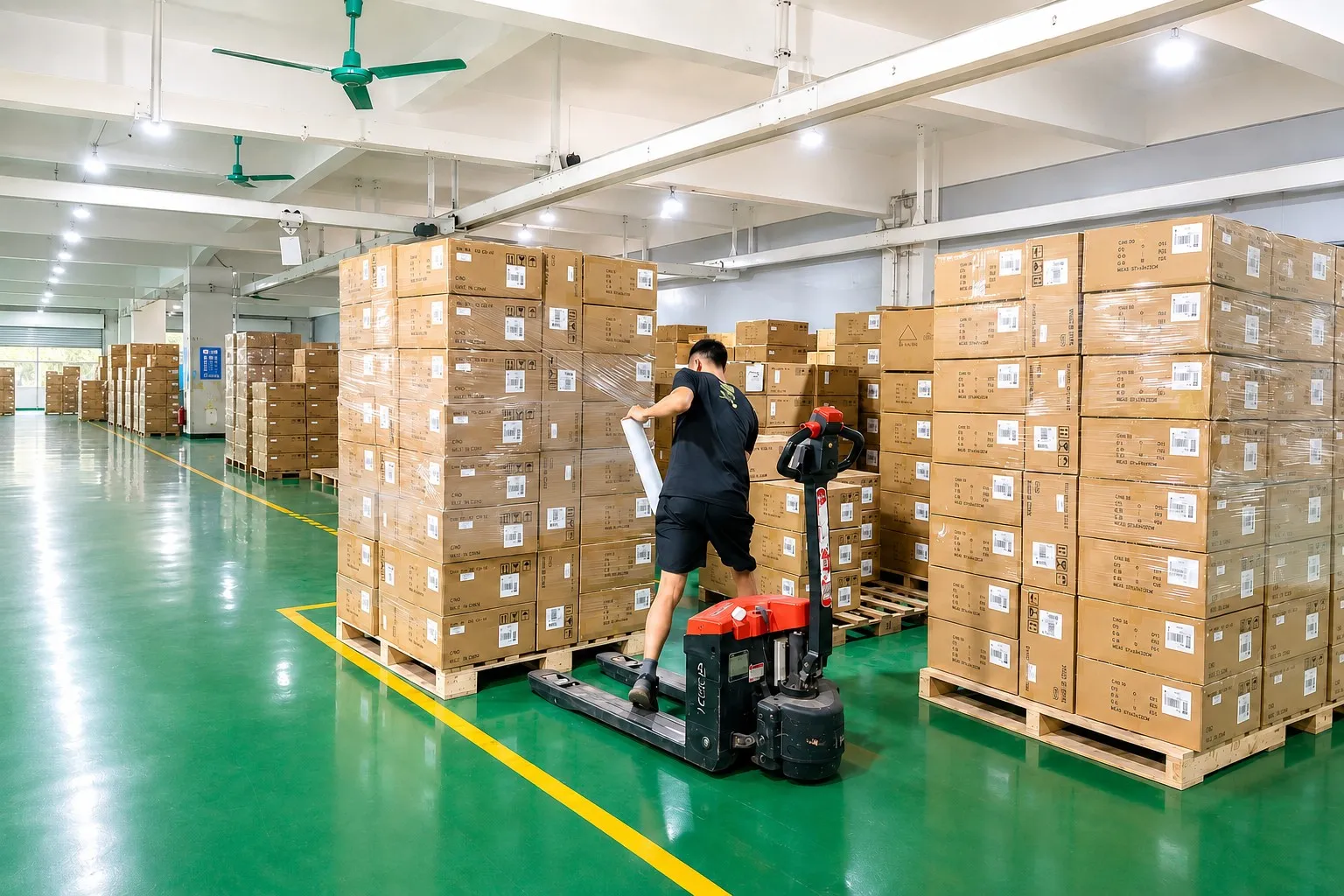
How Inventory Management and Stable Production Protect Your Business
When people think about 3D printer filament, they often focus on material quality, color consistency, printing performance, or pricing. While these factors are undoubtedly important, experienced distributors, retailers, and private-label brands understand that another factor can have an even greater impact on long-term business success: Supply chain reliability.
No matter how good a filament product may be, it becomes a problem when customers cannot receive it on time. Delayed shipments, stock shortages, inconsistent production schedules, and unreliable suppliers can quickly damage customer relationships and reduce profitability.
Behind every successful filament brand is not only a quality product but also a reliable supply chain capable of supporting consistent growth.
In today's highly competitive 3D printing market, choosing the right manufacturing partner is about much more than purchasing filament. It is about ensuring stable inventory, dependable production capacity, predictable lead times, and long-term business continuity.
This article explores why supply chain reliability has become one of the most important factors when selecting a 3D printer filament manufacturer.
The Hidden Cost of Stock Shortages
Many distributors and resellers focus heavily on product pricing when evaluating suppliers. While competitive pricing is important, stock shortages often create far greater costs than small differences in unit price.
Imagine the following situation:
A customer places an order for 500 spools of PLA filament. Your supplier informs you that production is delayed and inventory is unavailable for another three weeks.
As a result:
1.Your customer postpones their purchase.
2.Your online store runs out of stock.
3.Your Amazon ranking begins to decline.
4.Existing customers look for alternative suppliers.
5.Competitors gain market share.
The direct cost of the missing inventory is only part of the problem. The real damage comes from lost trust and missed business opportunities.
Once customers find another supplier capable of delivering consistently, it can be difficult to win them back.
This is why experienced buyers often prioritize supplier reliability over small price advantages.
Why Reliable Inventory Matters More Than Ever
The global 3D printing industry continues to grow rapidly.
As demand increases, inventory management becomes increasingly important for distributors, wholesalers, and private-label brands.
Reliable inventory provides several advantages:
1.Faster Order Fulfillment
Customers expect quick delivery.
When inventory is available, orders can be processed and shipped immediately, reducing waiting times and improving customer satisfaction.
2.Better Sales Planning
Distributors can confidently launch promotions, run marketing campaigns, and participate in seasonal sales events when inventory levels are stable.
3.Reduced Business Risk
Inventory shortages create uncertainty.
Stable stock levels help businesses forecast sales, manage cash flow, and avoid emergency purchasing decisions.
4.Stronger Customer Loyalty
Reliable availability encourages repeat purchases and long-term customer relationships.
Customers remember suppliers who consistently deliver when needed.
Peak Season Challenges in the Filament Industry
Many businesses underestimate the impact of seasonal demand fluctuations.
Demand for 3D printing filament often increases during:
1.Holiday sales seasons
2.Educational purchasing periods
3.Major maker events
4.Product launches
5.Industrial procurement cycles
During these periods, manufacturers operating with limited production capacity may struggle to keep up with demand.
Common problems include:
1.Extended lead times
2.Production delays
3.Material shortages
4.Shipping bottlenecks
5.Quality inconsistencies caused by rushed production
For distributors, these disruptions can directly impact sales performance.
This is why supplier selection should include an evaluation of production scalability, inventory planning, and warehouse management systems.
Stable Production Is the Foundation of Reliability
Inventory alone is not enough.
A warehouse full of products today does not guarantee supply tomorrow.
True supply chain reliability starts with stable production processes.
Reliable manufacturers invest heavily in:
1.Raw Material Management
Consistent quality begins with stable raw material sourcing.
Manufacturers must maintain relationships with trusted material suppliers and establish quality standards for incoming materials.
2.Production Planning
Production schedules should be designed to support both regular demand and sudden increases in volume.
Effective planning minimizes disruptions and ensures predictable lead times.
3.Quality Control Systems
Consistent quality requires standardized testing procedures throughout the production process.
Reliable manufacturers perform inspections covering:
Diameter accuracy
Winding quality
Moisture control
Printability
Packaging quality
4.Capacity Expansion
As customer demand grows, manufacturers must be able to scale production without sacrificing quality.
Production flexibility is a key indicator of long-term reliability.
The Role of Warehouse Management
Warehouse management is often overlooked when evaluating filament suppliers.
However, it plays a critical role in ensuring fast and accurate order fulfillment.
An organized warehouse enables:
1.Efficient Inventory Tracking
Accurate inventory records reduce the risk of overselling or stock discrepancies.
2.Faster Shipping Operations
Well-organized storage systems improve picking and packing efficiency.
3.Better Product Protection
Proper warehouse conditions help protect filament from moisture, contamination, and physical damage.
4.Improved Order Accuracy
Warehouse management systems help reduce shipping errors and improve customer satisfaction.
For businesses operating internationally, warehouse efficiency directly impacts delivery performance.
Why Long-Term Partnerships Outperform Short-Term Transactions
Some buyers switch suppliers frequently in search of lower prices.
While this approach may occasionally reduce costs, it often introduces additional risks.
Long-term partnerships provide several advantages:
1.Better Forecasting
Manufacturers gain a deeper understanding of customer demand patterns and can allocate production capacity accordingly.
2.Priority Production Scheduling
Established customers often receive priority support during periods of high demand.
3.Improved Communication
Long-term relationships create faster problem-solving and greater transparency.
4.Joint Business Growth
Reliable manufacturers view customers as strategic partners rather than individual transactions.
This collaborative approach supports sustainable business growth for both parties.
Questions to Ask Before Choosing a Filament Manufacturer
Before selecting a supplier, buyers should evaluate more than product specifications and pricing.
Important questions include:
1.What is your monthly production capacity?
2.Do you maintain regular inventory levels?
3.How do you handle sudden increases in demand?
4.What quality control procedures do you follow?
5.How do you manage raw material sourcing?
6.What is your average lead time?
7.Do you support OEM and private-label projects?
8.How do you handle supply chain disruptions?
9.What warehouse systems do you use?
10.Can you provide references from long-term customers?
The answers to these questions often reveal more about a supplier's reliability than a product catalog ever can.
Reliability Creates Competitive Advantage
In the filament industry, quality is expected.
Reliability is what differentiates great suppliers from average ones.
A reliable supply chain helps businesses:
1.Reduce inventory risks
2.Improve customer satisfaction
3.Increase repeat purchases
4.Protect brand reputation
5.Support business expansion
For distributors, wholesalers, and private-label brands, supply chain reliability is not simply an operational concern.
It is a competitive advantage.
References for Supply Chain Planning
Supply reliability also depends on material behavior, storage discipline, and documented process control. Useful benchmarks include Prusa's filament drying guidance, Bambu Lab's filament drying recommendations, Bambu Lab's filament compatibility and parameter guide, ISO 9001 quality management guidance, and NIOSH safe 3D printing guidance.
Conclusion
Behind every successful filament brand is a reliable manufacturing and supply chain system.
Stable inventory, consistent production, effective warehouse management, and dependable delivery capabilities all contribute to long-term business success.
When evaluating a 3D printer filament manufacturer, it is important to look beyond pricing and product specifications.
The true value of a manufacturing partner lies in their ability to support your business growth through reliable supply, predictable lead times, and long-term operational stability.
As the global 3D printing industry continues to expand, businesses that prioritize supply chain reliability will be better positioned to serve customers, capture market opportunities, and build sustainable competitive advantages.
At Felarus, we believe that reliability is more than a promise—it is the foundation of every successful partnership.