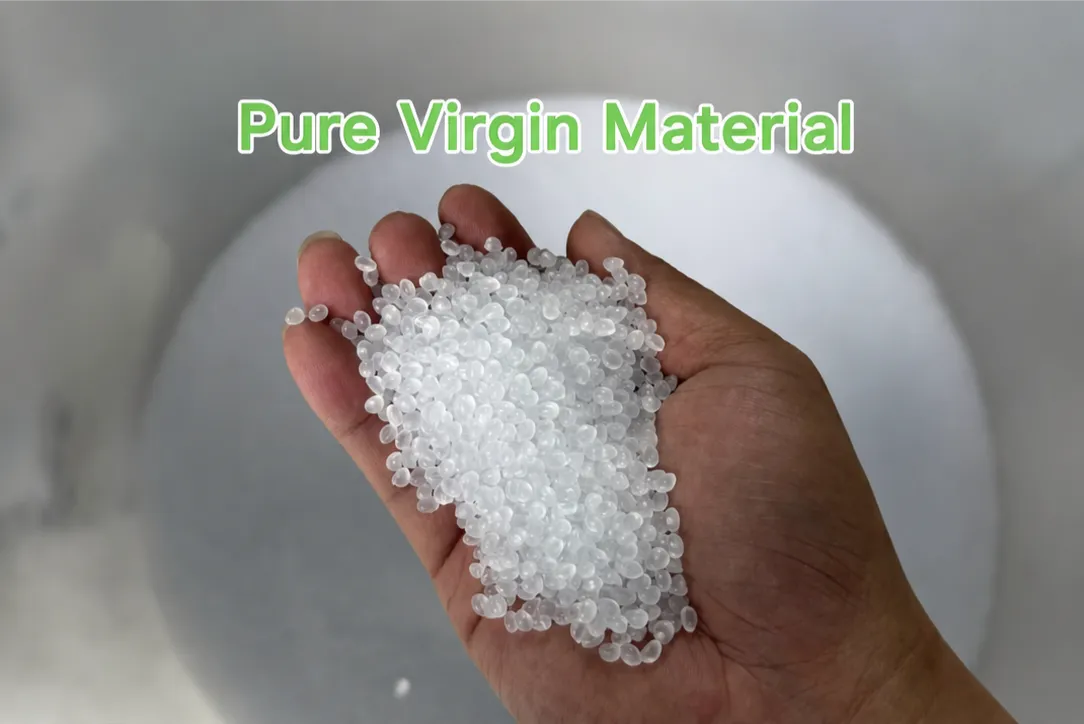
Wholesale filament buyers often begin with one simple question: should we buy virgin filament or recycled filament? The better purchasing question is more specific: which material system creates the lowest risk for our target market, application, brand promise, and reorder plan?
For distributors, print farms, and industrial buyers, the wrong choice can appear as color complaints, unstable repeat orders, nozzle issues, brittle spools, or a new validation cycle. That is why virgin vs recycled filament for wholesale buyers should never be treated as a simple price comparison.
Based on Felarus' China factory work with distributors, private-label brands, print farms, and bulk buyers, material origin is only one part of the decision. In real wholesale orders, we look at resin lot identity, recycled-feedstock source, drying records, filtration method, extrusion stability, online diameter monitoring, spool winding, vacuum packaging, sample print records, and whether the next batch can reproduce the approved sample.
Purchasing Principle
Choose virgin filament when repeatability, color control, engineering performance, and low after-sales risk are the priority. Choose recycled filament when sustainability positioning, suitable applications, and verified supplier control make sense. For many wholesale buyers, the strongest portfolio includes both.
The buyer-side evidence should include material documents, incoming material photos, an approved color or golden sample, print-test notes, and batch records that connect the approved sample to mass production.
What Is Virgin Filament for OEM Brands, Distributors, and Industrial Buyers?
Virgin filament is produced from polymer resin that has not been previously used, collected, reprocessed, or recycled. In wholesale sourcing, this definition is important because buyers are not only purchasing a spool of filament. They are buying repeatability across containers, color batches, retail SKUs, and customer expectations.
For OEM virgin filament supplier programs, virgin resin gives the manufacturer a cleaner starting point. Resin grades are easier to trace, compounding is predictable, and the same formulation can be reproduced with fewer variables. This helps private-label brands maintain color, finish, winding, and print settings.
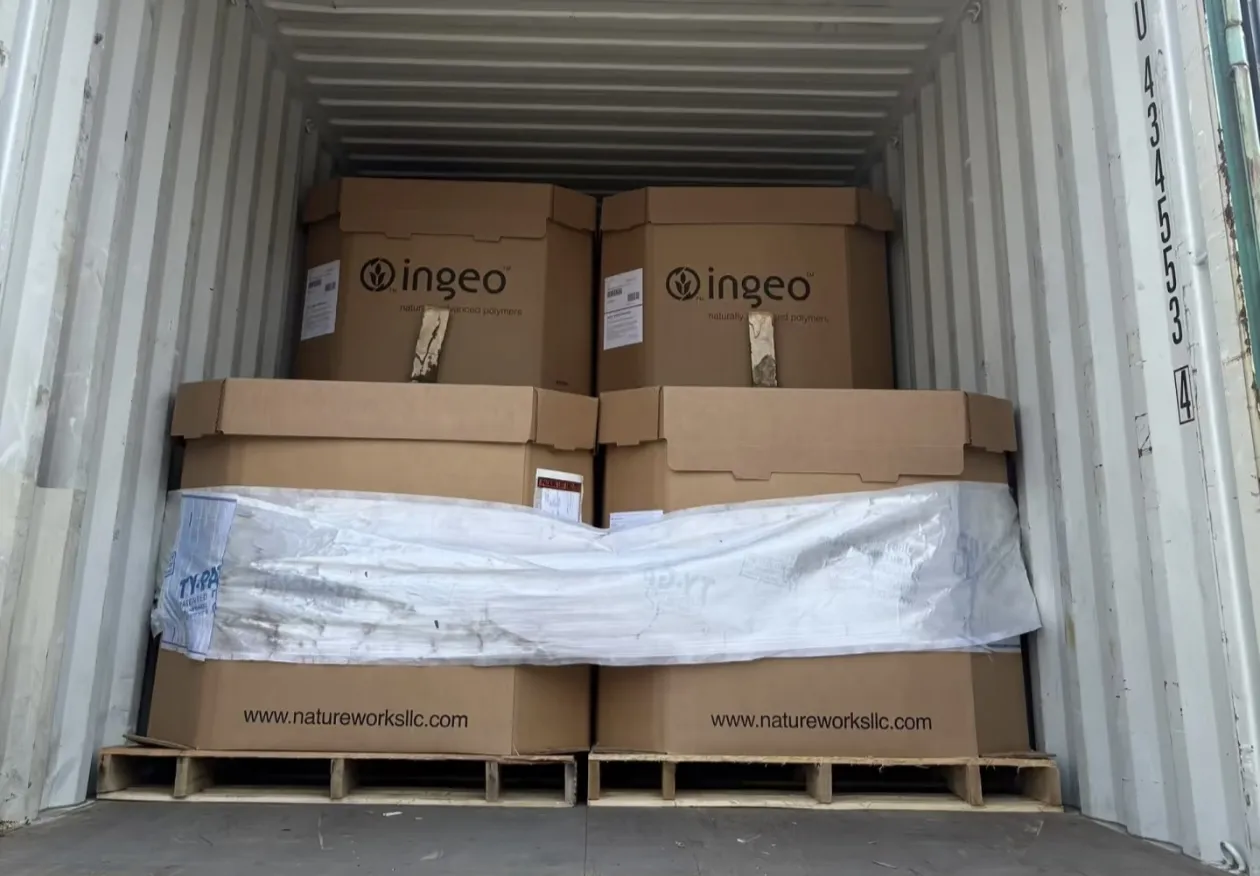
Why Private-Label Filament Brands Prefer Virgin Resin for Consistent Retail Products
Private-label filament buyers care about more than extrusion quality. They need the same product experience every time a customer opens a box. Retail buyers compare spools across shipments and expect color, gloss, winding, label, and printing temperature to feel consistent. Virgin resin makes this easier.
This matters for color-sensitive products such as Silk PLA filament, matte colors, rainbow lines, bright white PLA, and repeat-order PETG. If a seller builds a color collection, a batch shift can become a review problem. Virgin filament for private label brands is safer when presentation matters.
When Industrial Buyers Need Virgin PLA, PETG, ABS, ASA, Nylon, or PC Filament
Industrial buyers usually prioritize material traceability when the printed part has a defined function. Functional prototypes, tooling fixtures, automotive prototypes, outdoor parts, high-temperature components, and engineering applications require a tighter material window. Virgin PLA, PETG, ABS, ASA, nylon, and PC filament can reduce uncertainty when stable properties and repeat production matter.
Recycled engineering materials can work in selected cases, but they should not be selected casually. When the part is customer-facing, load-bearing, exposed to heat, or part of a longer program, virgin filament for industrial 3D printing is usually the lower-risk starting point.
What Is Recycled Filament for Eco-Friendly Retail and High-Volume Printing?
Recycled filament is made with polymer material that has been recovered and reprocessed before extrusion. The phrase sounds simple, but it is not a single quality level. A recycled filament wholesale supplier may use post-industrial material, post-consumer material, or a blended formulation with virgin resin, additives, color masterbatch, or modifiers.
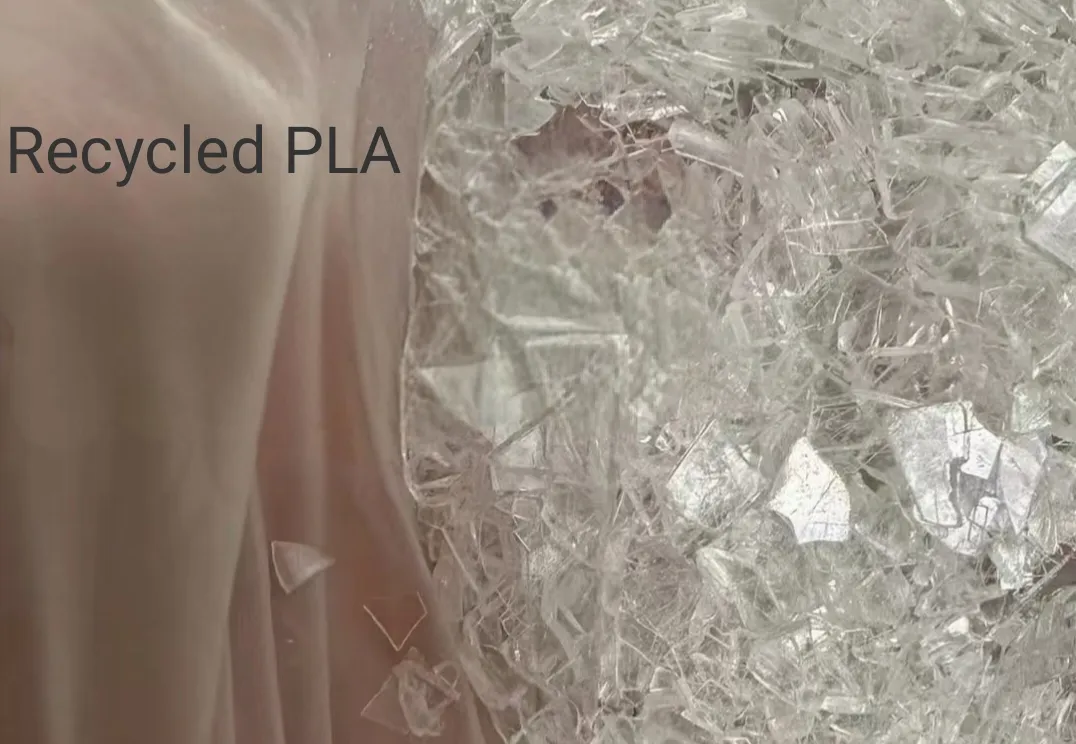
Post-Industrial Recycled Filament for Stable Bulk and Private-Label Orders
Post-industrial recycled material, often called PIR, usually comes from factory scrap, startup material, trimming, color-change material, and production surplus. Because the source is more concentrated, contamination risk is easier to control. For commercial filament production, PIR can be practical when the supplier has strong sorting, filtration, formulation, and batch documentation.
For buyers exploring bulk recycled PLA filament or private-label recycled PETG, post-industrial sources are often easier to scale than mixed consumer waste. They can still vary, but the variation is usually more manageable when the manufacturer controls the input stream.
Post-Consumer Recycled Filament for Sustainability-Focused Consumer Products
Post-consumer recycled material, often called PCR, comes from used plastic products. It requires collection, sorting, cleaning, grinding, reprocessing, and pelletizing before compounding. PCR can tell a stronger sustainability story, especially for recycled filament for eco-friendly retail, education programs, community projects, and corporate ESG campaigns.
The tradeoff is control. Post-consumer streams may vary more in base color, polymer mix, contamination, moisture, and thermal history. For dark colors, educational models, display prints, and non-critical prototypes, this may be acceptable. For bright colors or engineering parts, buyers should test carefully.
Why Wholesale Buyers Should Ask About Recycled Content Instead of Accepting a "Recycled" Label
A recycled label is not enough. Buyers should ask whether the material is PIR or PCR, what percentage is recycled, whether virgin resin is blended, how contamination is controlled, how the melt is filtered, and whether future batches can be reproduced. If sustainability claims matter, buyers should request supporting documentation.
A useful supplier answer should connect the claim to a batch: feedstock type, recycled percentage, blend ratio, filtration process, color target, and repeat-order plan. This is the difference between a marketing label and a purchasing specification.
Virgin Route
- Petrochemical or bio-based feedstock
- Polymerization
- Virgin resin pellets
- Compounding and color mixing
- Filament extrusion
- Wholesale or OEM packaging
Recycled Route
- Industrial scrap or consumer plastic
- Sorting and cleaning
- Grinding and reprocessing
- Recycled pellets
- Filtration and compounding
- Filament extrusion
- Wholesale or OEM packaging
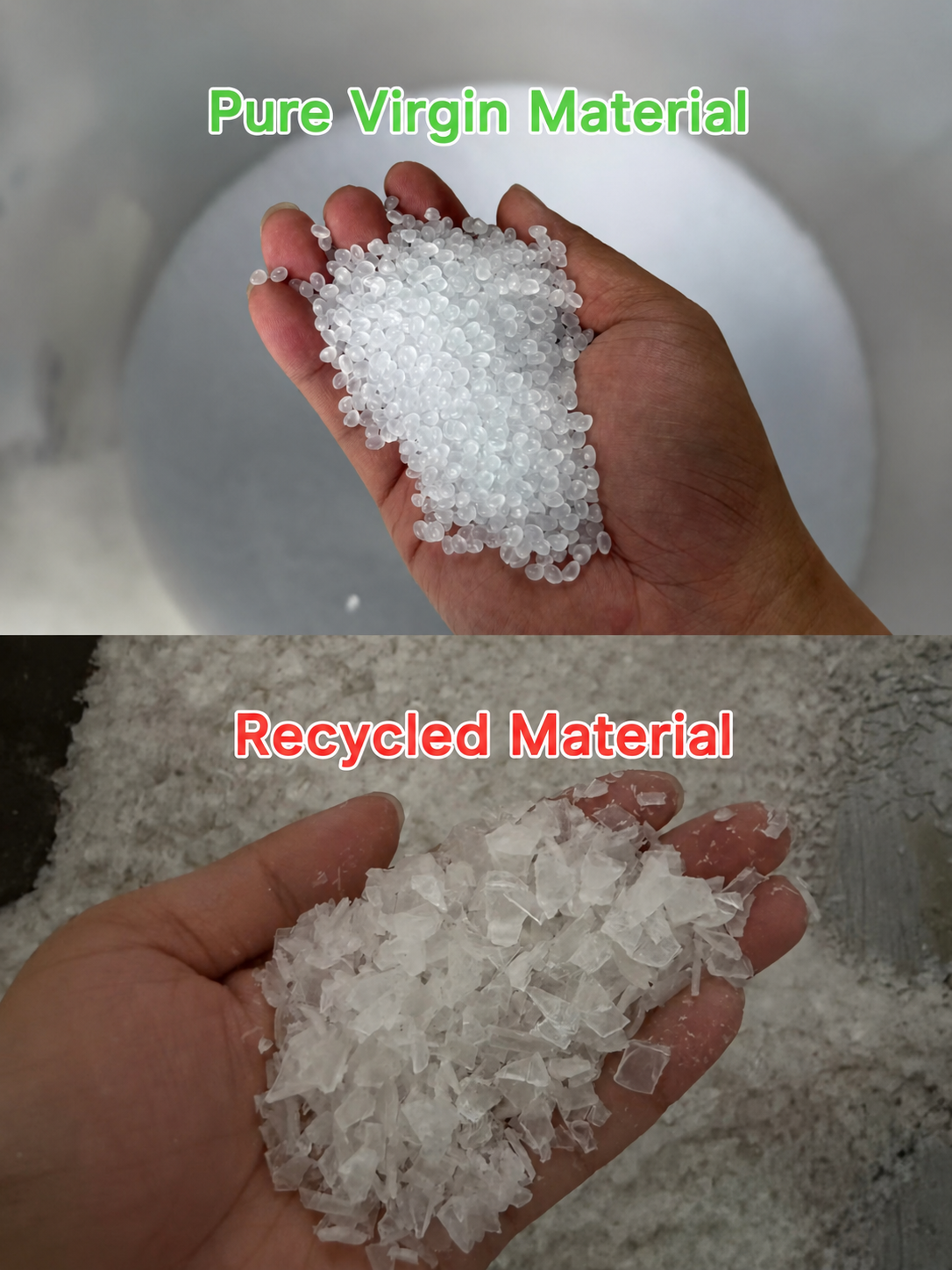
Virgin vs Recycled Filament for Wholesale Purchasing: Quality, Cost, and Supply Comparison
The most useful filament sourcing guide for distributors compares commercial risk, not only material identity. A well-made recycled filament can outperform a poorly controlled virgin filament. A well-controlled virgin filament can still fail if drying, extrusion, winding, or packaging are weak. The right evaluation starts with the factors that affect real customers.
| Wholesale Purchasing Factor | Virgin Filament | Recycled Filament | Why It Matters to Buyers |
|---|---|---|---|
| Raw-material traceability | Usually higher | Depends on recycling source | Affects consistency and documentation |
| Color consistency | Excellent | Moderate to good | Important for retail SKUs and repeat orders |
| Mechanical consistency | Excellent | Depends on feedstock and formulation | Important for functional parts |
| Diameter control | Depends mainly on extrusion QC | Depends mainly on extrusion QC | Influences print reliability |
| Sustainability positioning | Limited | Strong | Useful for eco-focused product lines |
| Custom color development | Easier | More difficult for light colors | Important for OEM branding |
| Batch repeatability | Usually easier | Requires stronger source control | Important for long-term supply |
| Suitable applications | Premium and technical | General, educational, sustainable | Determines product positioning |
Virgin vs Recycled Filament Price for Bulk Orders and Private-Label Programs
Recycled filament is often expected to be cheaper, but wholesale buyers should be careful with that assumption. High-quality recycled filament may include sorting, washing, pelletizing, filtration, additives, quality screening, testing, and documentation. If the buyer also requires tight diameter tolerance, stable color, low moisture, retail packaging, and repeatable formulation, savings may be modest.
For this reason, buyers comparing wholesale virgin PLA filament with recycled PLA should calculate total purchasing cost. The cheapest price per kilogram can become expensive if it increases technical support, returns, slow-moving inventory, customer complaints, or supplier switching costs.
How Batch Consistency Affects Distributor Returns and Customer Complaints
Batch consistency is where the commercial impact becomes visible. If one shipment prints at a different temperature, a print farm loses time recalibrating machines. If retail color shifts, an e-commerce seller may receive negative reviews. If brittle spools arrive after shipping, the distributor pays in support time and damaged trust.
For repeat SKUs, the best supplier is not simply the one with a good sample. It is the one that can reproduce the approved sample under normal production pressure.
Wholesale Buying Scorecard
Illustrative purchasing comparison based on typical material characteristics. Actual performance depends on resin source, formulation, and manufacturing control.
| Decision Factor | Virgin | Recycled |
|---|---|---|
| Batch Consistency | ★★★★★ | ★★★☆☆ |
| Color Matching | ★★★★★ | ★★★☆☆ |
| Mechanical Reliability | ★★★★★ | ★★★☆☆ |
| Sustainability Positioning | ★★★☆☆ | ★★★★★ |
| Cost Control | ★★★☆☆ | ★★★★☆ |
| OEM Flexibility | ★★★★★ | ★★★☆☆ |
Which Filament Should Distributors Choose for Retail Shelves and E-Commerce Sales?
Retail and e-commerce buyers need a product that survives visual comparison. Customers judge color, winding, surface finish, box condition, and first-print success before they understand the material supply chain. For filament for Amazon private label sellers, the safest strategy is to separate product lines by promise.
Virgin Filament for Premium Retail Brands and Repeat-Order Color Collections
Virgin filament fits premium retail brands, broad color collections, glossy Silk PLA, low-gloss Matte PLA filament, bright colors, and standardized SKUs that need stable replenishment. If the buyer wants premium shelf presence and minimal variation between restocks, virgin resin gives the brand more control.
Recycled Filament for Sustainable Product Lines and Eco-Conscious Consumers
Recycled filament fits sustainable product lines, education channels, community printing programs, promotional projects, and customers who actively value recycled content. Dark colors, natural tones, mixed shades, and less color-critical SKUs are often easier to manage than white, pastel, or high-gloss retail lines.
Can a Distributor Sell Both Virgin and Recycled Filament Under One Brand?
Yes. In many cases, a mixed portfolio is stronger. A distributor may offer a Premium Performance Series using virgin PLA+, PETG, ASA, or nylon; an Eco Series using recycled PLA or recycled PETG; an Educational Series for schools; and an Industrial Series for engineering applications. This keeps price, performance, and sustainability expectations clear.
Virgin vs Recycled Filament for Print Farms and High-Volume Prototyping
Print farms are sensitive to downtime. A small nozzle issue can spread across dozens of printers, and an unstable batch can turn a low material price into expensive lost production time. That is why best filament for high-volume 3D printing means predictable filament for the specific job, not simply the cheapest spool.
Is Recycled PLA Suitable for Print Farms Producing Prototypes and Display Models?
Recycled PLA for print farms can be suitable for early concept models, visual samples, education models, display pieces, non-load-bearing parts, and one-time assembly tests. These applications do not usually require long-term mechanical consistency, and the buyer may value lower cost or a sustainability message.
Even then, print farms should test before ordering. Sample evaluation should include long continuous printing, large-model warping checks, diameter inspection, brittleness observation, nozzle residue, and print-setting comparison across machines. A 2 kg sample may look good; a 1,000 kg order needs stronger proof.
When Print Farms Should Use Virgin Filament for Customer-Facing Production Parts
Virgin filament is usually better for paid customer deliverables, repeat production parts, dimensional assemblies, long-term reorder programs, and projects that require fixed color and surface finish. For virgin vs recycled filament for prototyping, recycled material may fit draft work, while virgin is often better for customer-facing samples.
How High-Volume Buyers Can Test Filament Before Ordering 500-1,000 kg
High-volume buyers should begin with the application, printer models, nozzle size, color requirements, packaging needs, and annual volume. Then test 2-5 kg samples at different temperatures and speeds, run continuous printing for dozens of hours, check net weight and winding, record printer model, nozzle temperature, bed temperature, speed, failure points, spool lot label, and photos of the printed surface. Keep a golden sample before confirming a trial bulk order.
High Performance Requirement
Engineering parts, premium OEM brands, repeat production, customer-facing products.
Recommended: Virgin filamentHigh Sustainability Priority
Sustainable retail, schools, community programs, eco-friendly consumer products.
Recommended: Recycled filamentHigh Cost Sensitivity
Draft prototypes, display models, internal testing, decorative prints.
Recommended: Qualified recycled or blended materialSustainability + Performance
Professional eco brands, corporate ESG projects, validated sustainable product lines.
Recommended: Strictly tested recycled formulationVirgin vs Recycled Filament for Industrial Parts and Engineering Applications
Industrial buyers are less interested in the label and more interested in whether the filament can support functional requirements over time. For virgin vs recycled filament for functional prototypes, the decision depends on validation burden, repeat production, and the cost of failure.
Why Engineering Filament Buyers Usually Prioritize Material Traceability
Engineering polymers are sensitive to formulation stability, moisture, drying, and processing history. Nylon, PC, ASA, and carbon-fiber reinforced materials can change when resin quality or drying discipline changes. If the buyer needs material data, repeat strength, controlled shrinkage, or predictable heat resistance, virgin engineering filament is usually easier to manage.
For virgin nylon filament for engineering applications, tooling fixtures, automotive prototypes, outdoor brackets, and functional assemblies, revalidation may cost more than the resin-price difference. This is why many industrial buyers treat virgin engineering materials as a risk-control choice.
Can Recycled PETG, ABS, or Nylon Be Used for Functional Parts?
Recycled PETG, ABS, or nylon can be used in selected functional applications, but buyers should validate formulation, recycled content, mechanical properties, moisture level, and batch consistency. Recycled PETG for functional parts may be reasonable for non-critical applications after testing; it is not a universal substitute for virgin engineering filament.
| Application | Virgin | Recycled | Recommended Choice |
|---|---|---|---|
| Decorative models | ★★★★☆ | ★★★★★ | Recycled or virgin |
| Educational printing | ★★★★☆ | ★★★★★ | Recycled |
| Draft prototypes | ★★★★☆ | ★★★★★ | Qualified recycled |
| Premium retail filament | ★★★★★ | ★★★☆☆ | Virgin |
| Print farm production | ★★★★★ | ★★★☆☆ | Depends on end use |
| Functional prototypes | ★★★★★ | ★★★☆☆ | Virgin |
| Engineering components | ★★★★★ | ★★☆☆☆ | Virgin |
| Sustainable product line | ★★★☆☆ | ★★★★★ | Recycled |
Scores are purchasing-decision indicators, not laboratory test results. Actual performance depends on resin source, formulation, drying, extrusion control, and batch testing.
Does Recycled Filament Cause Clogging, Brittleness, or Color Variation?
Recycled filament does not automatically cause printing problems, but weak recycled material control can increase risk. Buyers should separate material origin from manufacturing quality. Recycled filament with clean input material, good filtration, proper drying, and tight extrusion control can print reliably. Poorly made virgin filament can still fail.
Why Poorly Filtered Recycled Filament May Increase Nozzle-Clogging Risk
Nozzle clogging can come from contamination, insufficient filtration, uneven filler dispersion, mixed polymers, unstable pellet quality, or inconsistent diameter. This is why recycled filament quality control must include source control and melt filtration, not only final spool inspection.
How Moisture and Reprocessing Affect Recycled Filament Brittleness
Brittleness may come from moisture, polymer degradation, repeated heat processing, poor storage, winding stress, or weak packaging. Buyers should ask how the supplier dries material before extrusion and seals finished filament for international shipping, especially for PETG, nylon, PC, and other moisture-sensitive materials.
Why Light Colors Are More Difficult to Produce with Recycled Resin
Recycled base material can carry an underlying color. White, light gray, pastel, and translucent colors are harder to match because the recycled feedstock may not start from a neutral base. Black, dark gray, navy, and mixed colors usually tolerate more variation. OEM buyers should define acceptable color difference standards before mass production.
How Wholesale Buyers Should Audit a Virgin or Recycled Filament Supplier in China
A strong supplier audit protects both virgin and recycled orders. Buyers searching for how to source filament from China should evaluate the factory's process, not only the quotation. The right questions reveal whether the supplier can repeat quality after the sample stage.
What Raw-Material Documents Should Filament Importers Request?
Depending on the market and project requirement, importers may ask for material specifications, technical data sheets, safety data sheets, resin source information, recycled-content declarations, relevant test reports, certification scope, and batch identification. Not every order requires every document, but the supplier should clearly explain what is available.
What Quality-Control Data Should OEM Filament Buyers Check?
OEM buyers should check diameter tolerance, ovality, net weight, moisture control, color difference, print testing, tensile or impact testing when relevant, spool winding, vacuum packaging, carton inspection, and batch records. For private-label packaging, commercial appearance is part of quality control because retail customers judge the product before they print.
Supplier Evidence That Makes a Virgin or Recycled Recommendation Trustworthy
Before a buyer accepts either material route, the supplier should be able to explain how the sample becomes a repeatable production order. In Felarus purchasing discussions, the most useful evidence is practical and batch-specific:
- Resin brand, grade, or recycled feedstock route for the approved formulation.
- Material specification, safety data sheet, and recycled-content declaration when required by the market.
- Raw-material photos, sample spool photos, and packaging proof for the same order route.
- Color approval method, tolerance expectation, and golden sample storage.
- Diameter, ovality, net-weight, winding, moisture-control, and test-print records.
- Batch code connection between the approved sample, trial order, and future repeat orders.
Questions to Ask a Filament Manufacturer Before a Bulk Recycled Filament Order
- Is the recycled material post-industrial or post-consumer?
- What percentage of recycled resin is used in the formulation?
- Is virgin resin blended into the material?
- How is contamination controlled before extrusion?
- How is the resin filtered during production?
- How do you manage batch-to-batch color variation?
- Can you provide production samples before bulk confirmation?
- Can the same formulation be reproduced for future orders?
Sample approval should include printing performance and commercial appearance: color, gloss, winding, label, box, vacuum bag, odor, barcode, and retail display effect. A sample that prints well but looks inconsistent on the shelf may still create a brand problem.
How Felarus Manufactures Filament for Distributors, OEM Brands, and Print Farms
Felarus does not treat virgin and recycled filament as a simple better-or-worse choice. Our China factory experience shows that buyers need a material recommendation based on target market, final application, mechanical requirements, color target, sustainability positioning, budget, order quantity, packaging plan, and documentation needs.
Raw-Material Selection for Virgin, Recycled, and Customized Filament Programs
Felarus may recommend virgin resin when the product line depends on premium color consistency, bright color matching, engineering performance, or long-term SKU stability. For other buyers, recycled or blended material can support eco-friendly retail, education, promotional printing, and suitable high-volume applications. The key is to match the material route to the business model.
For example, a marketplace seller building a bright retail PLA color line usually needs a tighter color and packaging approval route than a school supplier ordering dark recycled PLA for classroom models. The material recommendation changes when the complaint risk, not only the material price, changes.
Drying, Filtration, and Extrusion Control for Stable Bulk Production
In Felarus filament production, practical control points include raw-material inspection, pre-drying, formulation and color mixing, filtration, extrusion temperature control, online diameter monitoring, stable spooling, net-weight checks, test printing, vacuum sealing, carton inspection, and shipment preparation. These steps help reduce moisture, clogging, brittle filament, color variation, and inconsistent batches.
OEM Color Matching and Private-Label Packaging for Distributors
Felarus supports custom colors, Pantone or physical sample matching, private labels, custom boxes, barcode and SKU support, mixed-material orders, wholesale quotations, and international shipping planning. Buyers can review the Felarus 3D printer filament product range, compare factory capability on the China filament factory page, or discuss a project through Felarus contact.
PLA / PLA+ Filament
Everyday printing, education, retail SKUs, and print farm use.
PETG Filament
Durable prototypes, functional parts, and professional applications.
TPU Flexible Filament
Flexible accessories, protective parts, grips, and mixed portfolios.
Carbon Fiber Filament
Stronger parts, tooling users, and advanced material programs.
Virgin or Recycled Filament: A Final Buying Decision for Wholesale Buyers
Choose virgin filament when you operate a premium or professional brand, need strict color matching, require long-term batch consistency, sell customer-facing retail SKUs, print industrial parts, or need to reduce after-sales risk. Virgin material is the clearer path when repeatability is worth more than the last small saving.
Choose recycled filament when you are building an eco-friendly product line, customers value recycled content, the application is education, model making, early prototyping, display printing, or other lower-risk use, and the supplier can prove source control and batch management. Recycled filament works best when the sustainability story and application match.
Consider offering both when you are a larger distributor, marketplace seller, or private-label brand serving different customer groups. A premium virgin line and a clearly positioned recycled line can help buyers choose by application instead of forcing every customer into one price point.
Wholesale Filament Sourcing
Need Help Choosing Virgin or Recycled Filament?
Felarus supports distributors, wholesalers, print farms, and private-label brands with virgin and recycled filament manufacturing, custom colors, OEM packaging, sample testing, and bulk shipping solutions. Share your target market, annual volume, color requirements, and sustainability goals, and we will recommend a suitable material route.
FELARUS FAQ
Frequently Asked Questions
Is recycled filament always cheaper than virgin filament?
No. High-quality recycled filament may require sorting, reprocessing, filtration, additives, testing, and documentation. Compare total purchasing cost, not only price per kilogram.
Is recycled PLA suitable for print farms?
It can suit prototypes, education models, display parts, and lower-risk production, but print farms should test continuous printing, diameter consistency, brittleness, nozzle residue, and repeatability before bulk orders.
When should wholesale buyers choose virgin filament?
Virgin filament is usually preferred for premium retail brands, strict color matching, engineering applications, functional prototypes, customer-facing production parts, and long-term repeat-order programs.
What should I ask a recycled filament supplier?
Ask whether the material is post-industrial or post-consumer, the recycled content percentage, whether virgin resin is blended, how contamination is controlled, how the resin is filtered, and whether future batches can reproduce the approved sample.