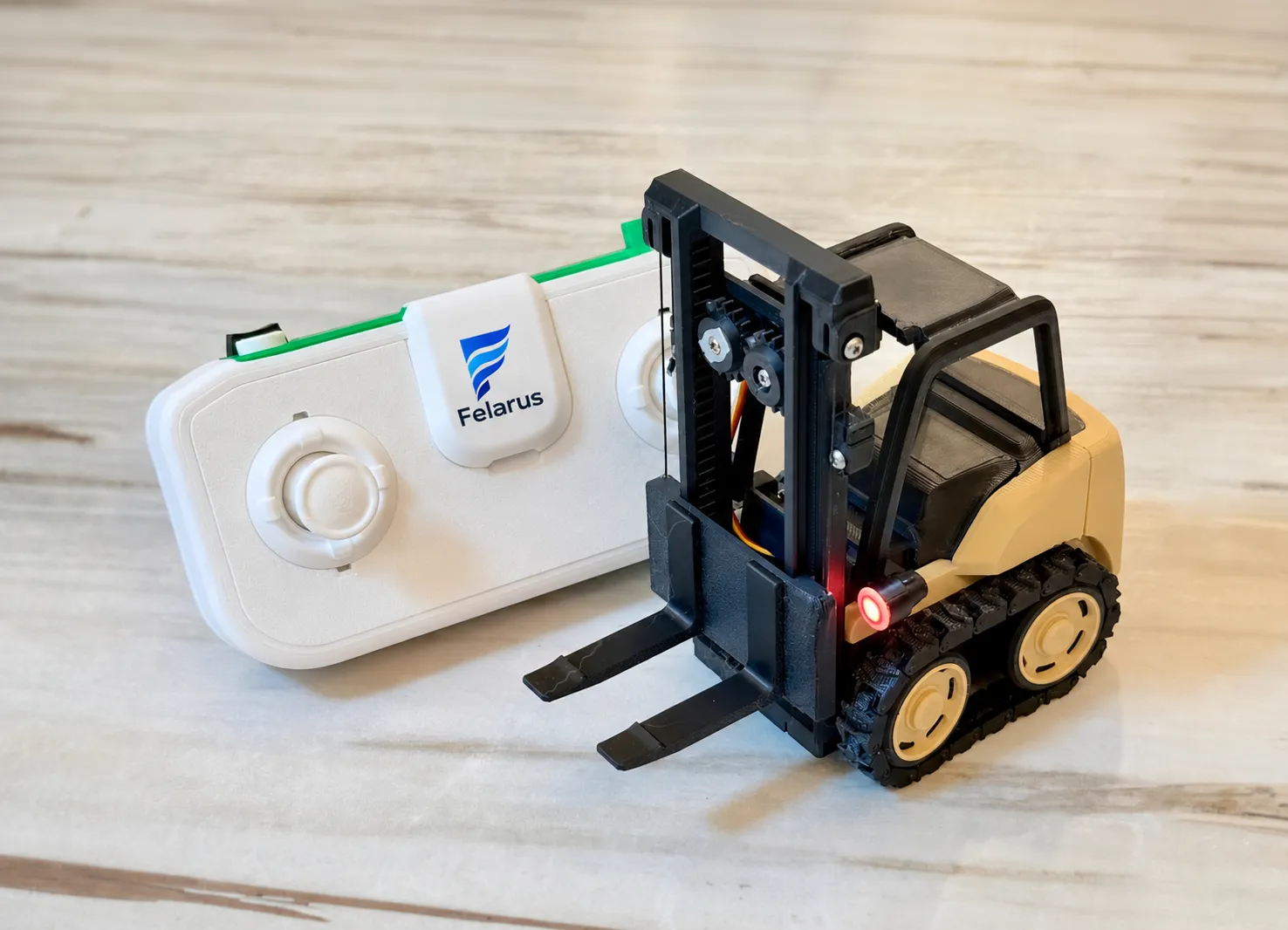
The consumer electronics industry is driven by rapid innovation, shorter product life cycles, and increasing customer expectations. From smart home devices and wearable technology to gaming accessories and IoT products, manufacturers must continuously develop new products while maintaining exceptional quality and controlling production costs.
Traditional manufacturing methods such as CNC machining and injection molding remain essential for mass production. However, these processes can be expensive and time-consuming during product development, especially when multiple design iterations are required. As a result, 3D printing has become an indispensable tool for consumer electronics companies seeking to accelerate product development, reduce costs, and improve manufacturing flexibility.
At Felarus, we provide high-quality 3D printing filaments designed to support every stage of consumer electronics development, from concept models and functional prototypes to production tooling and custom manufacturing solutions. Our materials deliver consistent printing performance, excellent dimensional accuracy, and reliable mechanical properties, helping manufacturers transform ideas into market-ready products faster than ever.
Challenges in Consumer Electronics Manufacturing
Consumer electronics manufacturers face constant pressure to launch reliable products faster while keeping production flexible. Product teams often need to validate new designs, test assemblies, improve user experience, and prepare market samples before committing to expensive tooling.
Short Product Development Cycles
Smart devices, accessories, controllers, and connected products move quickly from concept to launch, leaving little room for slow prototype sourcing.
Frequent Design Revisions
Enclosures, brackets, buttons, ports, clips, and internal clearances often require repeated adjustments before mass production.
High Prototype Costs
CNC machining and injection molding can be costly for early-stage validation, especially when teams need multiple design iterations.
Tight Dimensional Tolerances
Electronic housings and assemblies must fit PCBs, sensors, screens, connectors, fasteners, and heat-management components accurately.
Customized Product Demand
Brands increasingly need limited-run accessories, customized mounts, specialized protective covers, and product variations for different markets.
Faster Time to Market
Traditional manufacturing methods often struggle to keep up with rapid prototyping, functional testing, and low-volume production requirements.
3D printing provides a flexible and cost-effective solution by enabling rapid prototyping, functional testing, production fixtures, and small-batch manufacturing without the delays of mold development.
Why 3D Printing Matters in Consumer Electronics
Consumer electronics is one of the fastest-moving industries in the world. New smartphones, wearable devices, smart home products, gaming accessories, and connected IoT devices are launched every year, leaving manufacturers with little time for lengthy product development cycles.
3D printing allows engineers and product designers to rapidly create physical prototypes, evaluate product functionality, and make design improvements before investing in expensive tooling. Instead of waiting several weeks for machined parts or injection molds, manufacturers can produce prototypes within hours, significantly reducing development time.
Beyond prototyping, additive manufacturing also supports low-volume production, customized components, manufacturing fixtures, and engineering tools, making it an essential technology throughout the entire product lifecycle.
Key Benefits
- Accelerated product development
- Reduced prototype costs
- Faster design validation
- Improved engineering efficiency
- Lower tooling expenses
- Greater design flexibility
- Shorter time-to-market
- Customized manufacturing solutions
Whether you manufacture consumer electronics, smart devices, communication equipment, or electronic accessories, selecting the right 3D printing material plays a crucial role in achieving reliable performance and production efficiency.
Typical Applications in Consumer Electronics
Felarus materials support concept models, functional prototypes, electronic housings, wearable accessories, cable management parts, production fixtures, and engineering tools used throughout consumer electronics development.
Electronic Enclosures
Electronic housings protect sensitive internal components while providing an attractive appearance for finished products. 3D printing enables manufacturers to quickly produce PCB enclosures, IoT device housings, smart controller cases, electronic instrument covers, sensor housings, and communication device enclosures.
PETG, ABS, and PC are among the most popular materials for these applications due to their balance of strength, durability, and printability.
Functional Product Prototypes
Appearance models are no longer enough during product development. Functional prototypes allow manufacturers to evaluate structural strength, component assembly, internal clearance, mechanical movement, heat dissipation, and user ergonomics before production.
Rapid prototyping helps engineering teams identify design issues early and reduce costly modifications during later production stages.
Manufacturing Fixtures and Assembly Jigs
Production lines for consumer electronics rely heavily on custom fixtures to improve efficiency and ensure consistent assembly quality. Typical 3D printed tools include positioning jigs, assembly fixtures, inspection gauges, drilling guides, testing fixtures, and quality control tools.
Compared with traditional machining, additive manufacturing significantly reduces lead times and production costs, especially for customized or low-volume tooling.
Smart Home Devices
The global smart home market continues to expand rapidly, creating increasing demand for fast product development. Typical applications include smart speaker housings, security camera brackets, smart switch covers, home automation devices, wireless gateway enclosures, and sensor mounting systems.
3D printing enables manufacturers to quickly validate designs and accelerate new product launches.
Wearable Technology
Wearable electronics require lightweight, durable, and ergonomic components. Common printed parts include smartwatch prototypes, fitness tracker enclosures, charging dock accessories, wristband connectors, sensor holders, and protective covers.
Manufacturers often combine rigid materials such as PETG or PC with flexible TPU components to achieve optimal functionality.
Cable Management and Accessories
Many consumer electronic products require customized cable management solutions, including cable clips, wire organizers, charging station accessories, mounting brackets, connector holders, and protective sleeves.
Flexible TPU offers excellent durability and impact resistance for these applications.
How to Choose the Right Material
Different consumer electronics applications require different material properties. A filament that works well for an appearance prototype may not provide enough heat resistance, impact strength, flexibility, or long-term durability for a functional housing or production fixture.
When selecting a filament, manufacturers should consider:
- Mechanical strength
- Heat resistance
- Flexibility
- UV resistance
- Surface finish
- Chemical resistance
- Dimensional stability
- Printing efficiency
This guide helps identify the most suitable material for every consumer electronics application, from visual models and electronic enclosures to protective covers, engineering tools, and production fixtures.
Recommended 3D Printing Materials
Choosing the appropriate filament depends on the specific requirements of each application, including strength, flexibility, heat resistance, outdoor durability, and surface finish.
PLA+
PLA+ is one of the most widely used materials for concept models and appearance prototypes.
Best suited for product demonstrations, design verification, appearance models, marketing samples, and educational projects.
Advantages include easy printing, excellent surface quality, high dimensional accuracy, minimal warping, and cost-effective production. PLA+ is ideal when visual appearance is more important than mechanical performance.
PETG
PETG has become one of the most popular engineering materials for consumer electronics due to its outstanding balance of strength and ease of printing.
Recommended applications include electronic housings, functional prototypes, structural components, mounting brackets, and production parts.
Benefits include excellent impact resistance, strong layer adhesion, good chemical resistance, higher heat resistance than PLA+, and low printing shrinkage.
ABS
ABS remains a trusted material for engineering applications that require greater durability and thermal stability.
Typical uses include durable electronic enclosures, mechanical assemblies, production tooling, and industrial electronic components.
ABS offers excellent toughness, good heat resistance, easy post-processing, and strong mechanical performance for demanding environments.
ASA
For outdoor electronics, UV resistance is essential. ASA provides outstanding long-term durability in outdoor conditions.
It is ideal for outdoor monitoring equipment, security camera housings, smart garden devices, communication equipment, and solar energy accessories.
Key advantages include superior UV resistance, excellent weather resistance, long-lasting color stability, and high mechanical strength.
TPU
TPU is a flexible filament widely used for components requiring elasticity and impact absorption.
Typical applications include protective device covers, flexible buttons, cable organizers, anti-slip grips, wearable accessories, and shock-absorbing components.
Benefits include high flexibility, excellent wear resistance, superior impact absorption, and good chemical resistance.
PC (Polycarbonate)
Polycarbonate is an engineering-grade filament designed for applications requiring exceptional strength and heat resistance.
Suitable applications include high-strength electronic housings, industrial electronic devices, mechanical structural components, engineering prototypes, and functional testing equipment.
PC is ideal for demanding applications where standard materials may not provide sufficient mechanical strength, heat resistance, impact resistance, or dimensional stability.
PA6-CF
PA6-CF combines nylon with carbon fiber reinforcement to deliver exceptional rigidity, strength, and dimensional stability.
It is particularly suitable for manufacturing fixtures, robotic components, structural brackets, precision tooling, automated production equipment, and lightweight engineering parts.
Advantages include high stiffness, excellent strength-to-weight ratio, improved dimensional accuracy, enhanced wear resistance, and reduced deformation under load.
Material Selection Guide
| Application | Recommended Material | Why It Fits |
|---|---|---|
| Appearance Prototypes | PLA+ | Easy printing, clean surface quality, and reliable dimensional accuracy. |
| Functional Prototypes | PETG | Balanced impact resistance, strength, and printing stability. |
| Electronic Enclosures | PETG / ABS / PC | Useful strength, heat resistance, dimensional stability, and durability. |
| Outdoor Electronics | ASA | Excellent UV resistance and weather resistance for outdoor exposure. |
| Flexible Accessories | TPU | Elasticity, impact absorption, and wear resistance for protective parts. |
| Production Fixtures | PA6-CF | High stiffness, dimensional stability, and strength under repeated use. |
| Mechanical Parts | ABS / PC | Toughness, thermal stability, and reliable functional performance. |
| Structural Components | PA6-CF | Excellent rigidity, low deformation, and high strength-to-weight ratio. |
If your project has unique mechanical, thermal, or environmental requirements, the Felarus technical team can recommend the most suitable material based on your application.
Material Comparison Table
The table below compares common material choices for consumer electronics 3D printing. Ratings are general application-oriented guidelines; final selection should consider part geometry, printer setup, operating environment, and testing requirements.
| Material | Strength | Heat Resistance | Flexibility | Best Application |
|---|---|---|---|---|
| PLA+ | Appearance models | |||
| PETG | Electronic housings | |||
| ABS | Functional parts | |||
| ASA | Outdoor electronics | |||
| TPU | Protective covers | |||
| PC | Engineering parts | |||
| PA6-CF | Fixtures and tooling |
Why 3D Printing Is Better Than Traditional Manufacturing
Traditional manufacturing processes such as injection molding and CNC machining remain important for mass production. During product development, however, 3D printing gives consumer electronics manufacturers a faster and more flexible way to validate designs, produce low-volume parts, and reduce manufacturing cost.
| Traditional Manufacturing | 3D Printing | Manufacturing Benefit |
|---|---|---|
| Long lead time | Rapid production | Prototype parts can be produced in hours or days instead of waiting weeks. |
| High tooling cost | No mold required | Teams can test form, fit, and function before committing to injection molds. |
| Difficult customization | Easy customization | Designs can be adjusted for different device models, markets, and user requirements. |
| Expensive small batches | Cost-effective low volume | Small production runs, pilot builds, and test samples become more practical. |
| Slow design iteration | Fast prototype updates | Engineering teams can quickly revise product geometry after each test cycle. |
For rapid prototyping, low-volume manufacturing, custom fixtures, and early design validation, 3D printing often provides a more efficient path than traditional tooling-heavy processes.
Why Choose Felarus
Selecting the right filament supplier is just as important as selecting the right material. At Felarus, we focus on delivering reliable materials that meet the quality standards required by professional manufacturers and global distributors.
Why Felarus Filaments Stand Out
Our materials are developed for professional manufacturing environments. Every spool is designed to support stable output, reliable part quality, and repeatable performance across production batches.
Stable Extrusion
Controlled filament production helps maintain smooth feeding and reliable print consistency.
Excellent Dimensional Accuracy
Consistent diameter control helps reduce print failures and improve repeatability.
Low Moisture Absorption
Professional packaging and material handling help protect filament performance during storage and shipping.
Consistent Color
Stable color matching supports product samples, marketing models, and repeat orders.
Strong Layer Bonding
Reliable interlayer adhesion helps improve mechanical performance for functional parts.
Vacuum-Sealed Packaging
Moisture-controlled packaging helps maintain print quality from the first spool to the last.
Wide Printer Compatibility
Felarus filaments are developed for broad compatibility with common desktop and professional FDM printers.
Batch-to-Batch Consistency
Controlled manufacturing processes help distributors and manufacturers maintain stable supply quality.
Consistent Manufacturing Quality
Our filaments are produced under strict manufacturing controls to ensure consistent diameter, reliable extrusion, and stable printing performance. Consistent quality reduces print failures and improves production efficiency.
Reliable Printing Performance
Every filament is engineered to provide excellent layer adhesion, stable extrusion, minimal warping, consistent mechanical properties, and smooth printing performance. This helps manufacturers achieve repeatable results across multiple printers and production batches.
Comprehensive Material Portfolio
Felarus offers a broad range of materials suitable for consumer electronics, including PLA+, PETG, ABS, ASA, TPU, PC, and PA6-CF. This portfolio enables customers to select the ideal material for virtually any consumer electronics application.
OEM and Private Label Services
We support distributors, wholesalers, retailers, and brand owners with flexible OEM manufacturing services.
- Private label production
- Custom packaging
- Customized colors
- Branded spool designs
- Bulk manufacturing
- Professional export packaging
These services allow partners to build competitive product portfolios while maintaining consistent product quality.
Strict Quality Control
Quality is at the core of everything we manufacture. Each production batch undergoes comprehensive testing to ensure reliable performance in professional applications.
- Diameter consistency
- Moisture control
- Surface inspection
- Mechanical performance verification
- Color consistency
- Printability testing
Our quality management process ensures reliable performance from the first spool to the last.
Recommended Products
Explore related Felarus materials for consumer electronics prototyping, housings, flexible accessories, and production tooling. ABS, ASA, and PC requirements can also be supported through custom material consultation and OEM planning.
PLA+ Filament
Recommended for appearance models, product demonstrations, visual prototypes, and fast concept validation.
PETG Filament
Recommended for electronic housings, functional prototypes, brackets, and durable production parts.
TPU Flexible Filament
Recommended for protective covers, cable organizers, anti-slip grips, wearable accessories, and flexible components.
Carbon Fiber / PA6-CF Filament
Recommended for manufacturing fixtures, precision tooling, structural brackets, and lightweight engineering parts.
Silk PLA Filament
Recommended for attractive display models, product samples, and presentation prototypes.
Matte PLA Filament
Recommended for clean visual models, low-gloss appearance samples, and refined prototype presentation.
Explore More Industry Solutions
Felarus materials support multiple manufacturing sectors. Explore related solution pages to compare material choices across industries and build a stronger 3D printing material strategy.
Automotive
Materials for automotive prototypes, interior components, tooling, and functional parts.
Robotics
Engineering materials for robotic brackets, housings, tooling, and functional prototypes.
Manufacturing and Tooling
Filaments for production fixtures, inspection tools, replacement parts, and factory support.
Education
Reliable materials for classrooms, training labs, prototyping courses, and student projects.
Aerospace and Drones
High-performance materials for UAV parts, lightweight structures, and aerospace engineering prototypes.
FELARUS FAQ
Frequently Asked Questions
Practical answers for consumer electronics manufacturers, product developers, distributors, and engineering teams choosing 3D printing materials.
What is the best filament for electronic enclosures?
PETG, ABS, and PC are the most common choices because they provide excellent strength, dimensional stability, and heat resistance for functional housings.
Which material is recommended for functional prototypes?
PETG offers an excellent balance of printability, strength, and durability, making it one of the best options for functional prototypes.
Can PLA+ be used for consumer electronics?
Yes. PLA+ is ideal for appearance models, concept validation, product demonstrations, and design verification. For applications exposed to heat or mechanical stress, PETG, ABS, or PC are generally more suitable.
Is TPU suitable for electronic accessories?
Absolutely. TPU is commonly used for protective cases, cable organizers, anti-slip grips, wearable products, and flexible components due to its excellent elasticity and impact resistance.
When should I choose PA6-CF?
PA6-CF is recommended for engineering fixtures, robotic components, structural brackets, and production tooling where high rigidity, wear resistance, and dimensional stability are required.
Do you offer OEM and private label services?
Yes. Felarus provides comprehensive OEM solutions, including customized packaging, private labeling, color matching, and bulk manufacturing services for distributors and global brands.
Can Felarus support large-volume production?
Yes. Our manufacturing capabilities and stable supply chain enable us to support both small-batch orders and large-scale production with consistent quality and reliable delivery.
Consumer Electronics Filament Solutions
Partner with Felarus for Your Next Consumer Electronics Project
As consumer electronics continue to evolve, manufacturers need materials that combine reliability, performance, and consistency. Whether you are creating concept models, functional prototypes, production fixtures, or end-use components, Felarus offers high-quality filament solutions to support every stage of product development.
With a comprehensive range of engineering materials, strict quality control, and flexible OEM services, we help businesses improve development efficiency, reduce manufacturing costs, and bring innovative products to market faster.
If you are looking for a dependable partner for consumer electronics 3D printing materials, contact Felarus today. Our experienced team is ready to recommend the right filament for your application and provide customized solutions for your business.