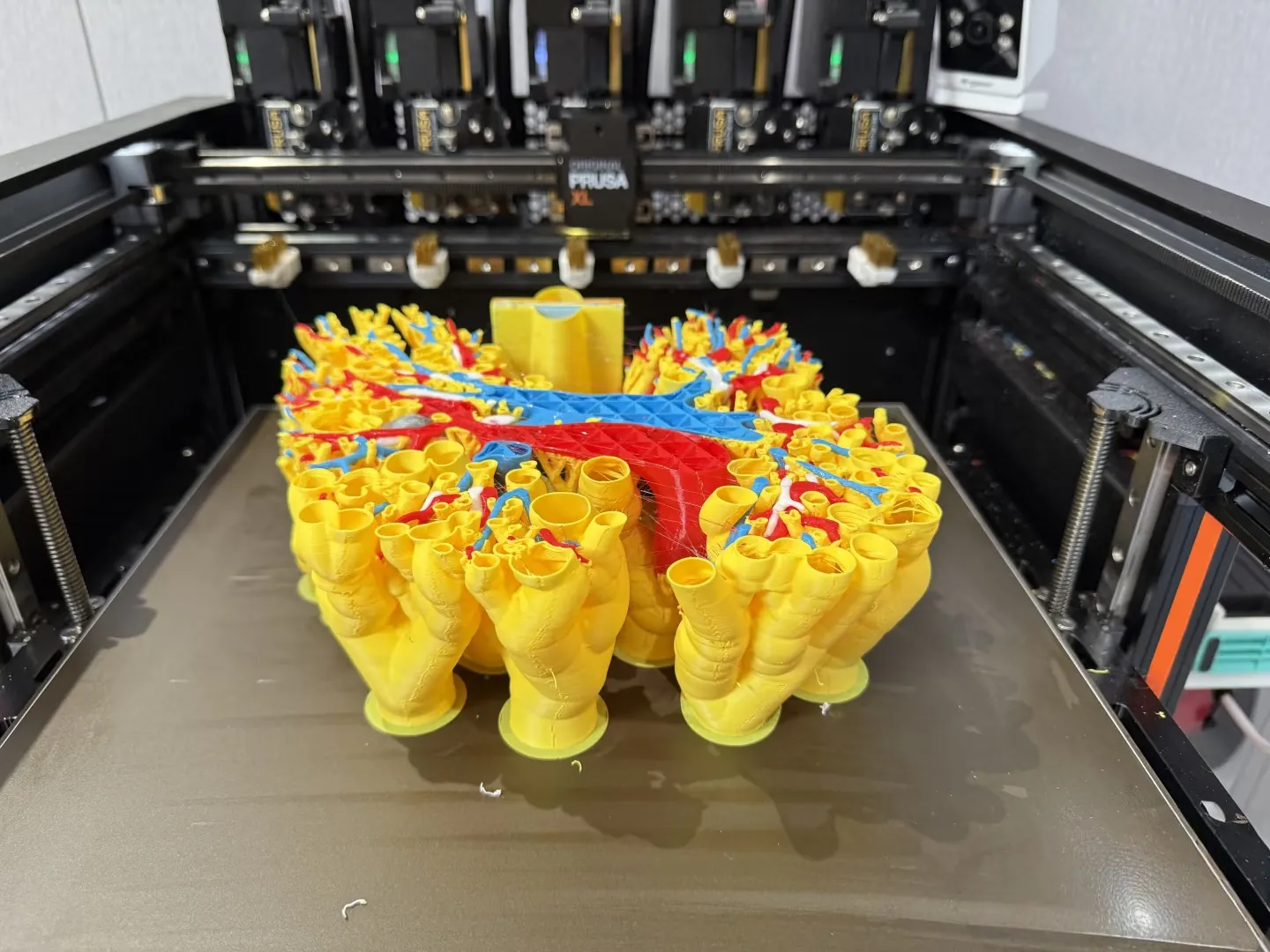
Introduction: Precision Materials for Medical 3D Models
Medical 3D printing gives healthcare teams, educators, dental laboratories, research institutions, and device developers a practical way to turn complex digital anatomy into accurate physical models. A printed heart, jaw, spine, skull, implant concept, or surgical planning aid can make a difficult case easier to understand because users can hold, rotate, section, and discuss the model in real space. For many teams, that physical feedback improves communication long before a final clinical or production decision is made.
FDM printing is especially valuable when a team needs accessible, repeatable, and cost-effective models. With reliable 3D printing filaments, hospitals, universities, and laboratories can produce anatomical replicas, dental demonstrations, orthopedic models, prosthetic prototypes, and medical equipment mockups without waiting weeks for outsourced tooling. Felarus supports these workflows with stable PLA+, PETG, TPU, ABS, and engineering-grade materials designed for consistent extrusion, dimensional accuracy, and dependable print quality.
For B2B buyers, material consistency is just as important as material choice. A university print lab, dental model supplier, or distributor may run the same file across many machines and many batches of filament. Stable color, clean winding, controlled moisture, and predictable extrusion help those teams keep training models, consultation models, and prototype samples consistent over time.
Industry Challenges in Medical Model Production
Medical model production is demanding because the printed part often has to communicate fine anatomical detail while also surviving repeated handling by surgeons, students, engineers, or patients. The model may not be a certified medical device, but it still needs to be clear, accurate, and professional enough to support planning, teaching, and product development.
High dimensional expectations
Anatomical structures, dental arches, bone fragments, and implant trial models depend on stable dimensions. Small extrusion changes can affect fit, scale, and visual interpretation.
Complex organic geometry
Organs, vessels, craniofacial anatomy, vertebrae, and joint surfaces contain curves and undercuts that are difficult to fabricate with traditional cutting or molding workflows.
Short project timelines
Medical teams often need a model quickly for consultation, surgical discussion, classroom demonstration, or prototype review. Long lead times reduce the usefulness of the model.
Repeated handling
Educational and consultation models are touched, passed around, transported, and stored. A material must balance clean detail with enough toughness for daily use.
Material selection uncertainty
Rigid anatomy, durable lab fixtures, flexible soft-tissue simulations, and engineering prototypes do not need the same filament. Choosing the wrong material can waste time and reduce model value.
Why 3D Printing Matters for Healthcare Teams
3D printing matters because it shortens the distance between imaging data, CAD design, and hands-on evaluation. A digital file can become a physical model within hours, allowing teams to review anatomy, test part geometry, explain treatment concepts, and iterate prototype designs without building expensive tooling first. This makes FDM printing useful for hospitals, dental labs, universities, research groups, orthopedic centers, and medical product teams.
Better visualization
Physical models help doctors, students, and patients understand spatial relationships that are difficult to judge from a screen alone.
Faster planning cycles
Teams can print a case model, review the result, adjust the file, and produce a revised version faster than many traditional manufacturing methods allow.
Lower prototype cost
FDM printing reduces dependence on machined samples and molded parts during early medical product development, especially when many iterations are expected.
Patient-specific communication
A model based on patient anatomy can make consultations clearer by showing the issue, planned procedure, or treatment approach in a direct and tactile way.
Flexible training tools
Medical schools and training centers can print repeatable teaching models for anatomy, dental education, orthopedic planning, and device demonstrations.
Practical R&D support
Engineers can print test housings, fit-check parts, prosthetic concepts, and fixture prototypes before moving to higher-cost production materials.
Typical Applications for Medical 3D Printing
Medical 3D printing is not limited to one department. The same material program may support education, dental planning, surgical discussion, device prototyping, and laboratory tooling. The key is matching the model purpose to the right filament.
Anatomical Models
Organs, bones, skulls, joints, vascular paths, and skeletal structures can be printed for teaching, consultation, and case review. PLA+ is often preferred for sharp detail and low warping.
Surgical Planning Models
Patient-specific models help surgeons discuss anatomy, evaluate access paths, rehearse challenging procedures, and communicate with multidisciplinary teams before entering the operating room.
Dental Demonstrations
Dental labs and clinics use printed arches, implant planning models, orthodontic demonstrations, and treatment simulation models where surface quality and dimensional stability are important.
Orthopedic Planning
Bone fragments, joint geometry, spinal anatomy, fracture cases, and implant positioning concepts can be printed to support preoperative discussion and education.
Prosthetic Prototypes
Designers can use rigid materials for structural concepts and TPU for flexible interfaces, soft components, and wearable prototype elements.
Medical Device Testing
Early-stage device teams print housings, brackets, covers, ergonomic samples, assembly jigs, and fit-check parts before investing in molded or machined prototypes.
Medical Education
Universities and training centers can print durable classroom models that improve hands-on anatomy learning and reduce dependence on limited traditional teaching resources.
Research and Development
Research groups use 3D printing to validate geometry, compare concepts, create repeatable test models, and accelerate the early development of healthcare technologies.
How to Choose the Right Material
The right filament depends on how the model will be used. A classroom skeleton, a dental display, a soft-tissue training aid, and a functional medical equipment prototype all need different performance. Before selecting a material, consider detail accuracy, stiffness, flexibility, strength, chemical exposure, heat resistance, color requirements, post-processing, and how often the model will be handled.
For detailed anatomy: PLA+
PLA+ is the practical first choice for anatomical replicas, classroom models, dental demonstrations, and patient communication models because it prints easily and holds detail well.
For durable models: PETG
PETG adds toughness, layer adhesion, and chemical resistance for models that are handled repeatedly, transported between rooms, or used in laboratory environments.
For flexible simulation: TPU
TPU is useful when a prototype needs elasticity, bendability, grip, or a softer tactile response, such as prosthetic interfaces and soft-tissue training concepts.
For engineering prototypes: ABS
ABS supports stronger, heat-resistant prototypes, equipment housings, and functional test parts when the printer setup can control warping and ventilation requirements.
For high-stiffness development: Carbon Fiber Filament
Carbon fiber reinforced materials are useful for stiff fixtures, engineering prototypes, and structural development where rigidity matters more than anatomical surface detail.
Recommended Materials for Medical Models
Felarus provides a broad material range for medical modeling, education, prototyping, and B2B filament supply. These materials are intended for models, demonstrations, prototypes, and research use. They are not certified for implantable, surgical, or direct patient-contact medical devices.
PLA+ | Best Overall for Medical Models
PLA+ offers excellent printability, fine detail reproduction, low warping, smooth surfaces, and wide color options. It is ideal for anatomical models, surgical demonstrations, dental displays, and educational tools.
PETG | Durable Demonstration Models
PETG provides higher impact resistance and stronger layer adhesion than PLA. It works well for functional medical prototypes, durable lab components, and models that need repeated handling.
TPU | Flexible Medical Prototypes
TPU offers flexibility, elasticity, fatigue resistance, and a soft feel. It is recommended for soft-tissue simulation, flexible prosthetic components, wearable prototypes, and ergonomic testing.
ABS | Functional Testing
ABS is suitable for engineering-oriented medical projects where heat resistance, toughness, post-processing, and functional testing are more important than the easiest print setup.
Carbon Fiber Filament | Rigid Engineering Parts
Carbon fiber reinforced filament helps create stiff fixtures, equipment prototypes, and development parts for teams working across medical devices and industrial manufacturing.
Material Comparison
The table below provides a practical comparison for medical model printing. Star ratings reflect typical FDM use cases and assume correct printer calibration, dry filament storage, and appropriate nozzle and bed settings.
3D Printing vs Traditional Manufacturing
Traditional manufacturing remains important for certified medical products and final production, but 3D printing is often the faster choice for planning, teaching, prototyping, and early validation. It gives teams more freedom to print organic geometry, revise models quickly, and produce small batches without tooling cost.
| Traditional Manufacturing | 3D Printing | Medical Modeling Benefit |
|---|---|---|
| Long tooling cycle | Direct production from digital files | Teams can review models quickly for education, consultation, and early development. |
| High cost for one-off parts | Economical single-model production | Patient-specific anatomy and custom prototypes become more practical. |
| Difficult organic shapes | Complex curves and internal forms | Bones, vessels, organs, and dental structures can be represented more clearly. |
| Slow design changes | Fast digital iteration | Engineers and clinicians can compare multiple versions before final decisions. |
| Centralized outsourcing | In-house model production | Hospitals, labs, and universities can control timing, privacy, and revision cycles. |
Why Choose Felarus for Medical Model Filaments
Reliable medical models start with reliable material. A filament that clogs, absorbs too much moisture, changes diameter, or prints with inconsistent color can waste time and reduce confidence in the final model. Felarus focuses on stable B2B filament manufacturing for distributors, medical education suppliers, universities, laboratories, and professional print users.
Consistent diameter control
Our manufacturing process targets tight filament tolerance to support stable extrusion, accurate layers, and repeatable dimensions during long prints.
Smooth surface performance
Controlled raw materials and extrusion help produce clean anatomical details, smooth dental models, and professional presentation surfaces.
Stable batch quality
Consistent color, winding, and material performance help print farms and institutional buyers maintain repeatable model production.
Wide material selection
Felarus supports everyday PLA printing, durable PETG, flexible TPU, engineering materials, and carbon fiber reinforced filament for broader prototyping needs.
B2B supply capability
We support distributors, wholesalers, laboratories, schools, and manufacturers with responsive communication, sample testing, and scalable order planning.
OEM and Private Label Service
Medical education suppliers, filament distributors, dental lab supply companies, university procurement programs, and private brands often need more than standard spools. Felarus provides OEM and private label support for custom packaging, branded labels, barcode requirements, bulk production, sample preparation, and color development. If your market needs model-friendly white, bone tone, translucent colors, dental demonstration shades, or institutional packaging, our team can help create a practical supply program.
Quality Control from Raw Material to Spool
Quality control is especially important when printed models are used for teaching, planning, and professional demonstration. Felarus manages production through raw material selection, controlled extrusion, diameter monitoring, clean winding, moisture protection, vacuum packaging, final inspection, and batch traceability. These steps help reduce print failures, support smoother extrusion, and improve confidence during long anatomical model prints.
For medical modeling programs that print frequently, this consistency also supports easier process documentation. Teams can record material type, color, batch, temperature settings, and storage conditions, then repeat successful print profiles for future anatomy models, dental cases, and prototype reviews.
Related Products for Medical 3D Printing
PLA+ Filament
Best for anatomical models, dental demonstrations, medical education, patient communication, and general-purpose model production.
PETG Filament
Best for durable prototypes, laboratory components, repeated handling, and functional medical development models.
TPU Filament
Best for flexible prototypes, soft-tissue simulation, wearable medical concepts, and prosthetic development models.
Carbon Fiber Filament
Best for rigid fixtures, stiff engineering prototypes, test supports, and high-strength development components.
FELARUS FAQ
Frequently Asked Questions
Practical answers for hospitals, universities, dental labs, distributors, and medical product teams choosing filament for medical model printing.
Can Felarus filaments be used for medical devices?
Felarus filaments are intended for medical models, education, demonstrations, prototyping, product development, and research applications. They are not certified for implantable, surgical, or direct patient-contact medical devices.
Which filament is best for anatomical models?
PLA+ is usually the best starting point because it is easy to print, dimensionally stable, low-warping, and capable of reproducing fine anatomical detail.
Can TPU simulate soft tissue?
Yes. TPU provides flexibility and elasticity, making it useful for soft-tissue simulation, flexible prosthetic concepts, wearable prototypes, and tactile training models.
Is PETG suitable for medical lab prototypes?
Yes. PETG offers toughness, layer adhesion, and better chemical resistance than PLA, making it suitable for durable demonstration models and non-certified laboratory prototypes.
Which material is recommended for dental models?
PLA+ is commonly recommended for dental demonstrations because it prints accurately, holds detail well, and produces a smooth surface. PETG can be selected when extra durability is needed.
Do you support OEM filament production?
Yes. Felarus supports OEM manufacturing, private labeling, custom packaging, bulk orders, sample testing, and distributor supply programs for professional and institutional buyers.
What diameter tolerance do you provide?
Felarus production targets tight diameter control, commonly within +/-0.02 mm for standard filament programs, helping support stable extrusion and consistent print quality.
How should medical model filaments be stored?
Keep filament sealed with desiccant when not in use, avoid humidity and dust, and dry moisture-sensitive materials before long prints to maintain surface quality and extrusion stability.
Build Better Medical Models with Felarus
Whether you are producing anatomical replicas, dental models, orthopedic planning tools, prosthetic prototypes, or medical device development samples, Felarus provides stable 3D printing filaments for accurate and repeatable results.
Explore our materials, request samples, or contact our team for wholesale pricing, OEM service, private label support, and customized filament supply for your healthcare, education, or research market.
Get Wholesale Pricing for medical model filament supply and private label programs.