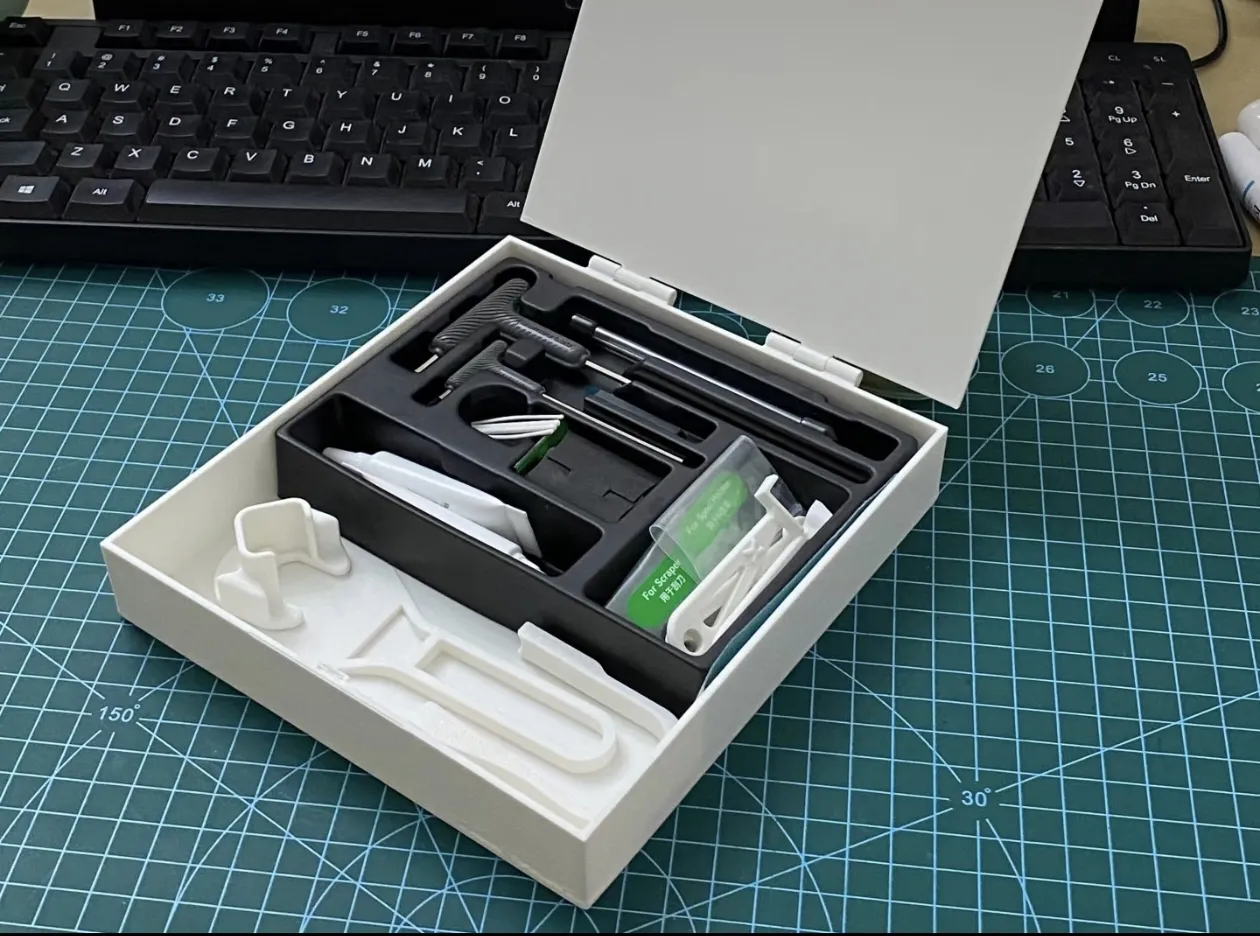
Introduction: Faster Tooling for Modern Production
Manufacturing teams are under constant pressure to shorten lead times, control tooling costs, and keep production lines flexible. A fixture that once waited in a machining queue for two or three weeks may now be needed in a few days because a product design changed, a line layout moved, or a customer requested a small batch. This is where 3D printed tooling has become a practical industrial solution rather than only a prototyping method.
With engineering filaments from Felarus, manufacturers can produce jigs, fixtures, gauges, soft jaws, robotic end effectors, packaging aids, and custom production tools directly from digital files. Materials such as PETG filament, ABS, ASA, Nylon (PA), and carbon fiber reinforced materials support different levels of toughness, heat resistance, wear resistance, stiffness, and ease of printing. The result is a faster tooling workflow that helps factories test ideas quickly, improve operator ergonomics, and deploy functional production aids with less delay.
For many production teams, the real value is not only the printed part itself. It is the ability to move from a problem on the floor to a working tool in the hands of an operator with fewer approvals, fewer suppliers, and fewer waiting days. A small bracket, a safer handle, a new checking nest, or a revised gripper finger can be printed, tested, labeled, and stored as a repeatable digital asset. Over time, this turns tooling into a more responsive part of the manufacturing system.
Industry Challenges in Tooling and Fixtures
Traditional tooling is reliable, but it is not always fast or flexible. CNC machining, metal fabrication, and outsourced fixture production can involve high minimum costs, long purchasing cycles, and limited room for late design changes. For production engineers, even a small fixture revision can create downtime if the old tool no longer fits a new part geometry.
Factories also face practical shop-floor problems. Operators need lightweight tools that are easy to handle during repetitive assembly. Quality teams need inspection fixtures that locate parts consistently. Automation teams need custom robot grippers that are strong but light enough to protect payload capacity. Maintenance teams often need replacement brackets, guards, guides, and adapters immediately, not after a long procurement cycle.
Long lead times
Machined tooling can slow product launches when every new fixture must wait for external production and internal approval.
High cost for small batches
Low-volume tooling, trial fixtures, and one-off production aids are often too expensive when produced by conventional methods.
Limited revision flexibility
When a design changes, traditional tooling can require rework, remachining, or a completely new part.
Operator fatigue
Heavy metal fixtures can increase repetitive strain, especially in assembly, packaging, inspection, and manual handling tasks.
Why 3D Printing Matters for Industrial Tooling
3D printing changes the economics of tooling because parts can be made directly from CAD files without molds, dedicated cutting fixtures, or complex supply chains. A production engineer can design a fixture, print it overnight, test it on the line, and improve the design immediately. That speed supports lean manufacturing because teams can solve small bottlenecks before they become expensive delays.
Additive manufacturing also gives engineers more design freedom. Printed tooling can include internal weight reduction, ergonomic handles, part-specific nests, labels, cable routes, sensor pockets, threaded inserts, and replaceable contact surfaces. Compared with many metal tools, 3D printed fixtures can be lighter, safer to handle, and easier to customize for each station.
- Faster fixture development and production line deployment
- Lower cost for custom jigs, gauges, and trial tooling
- Lightweight tools that improve daily operator handling
- Easy design changes when parts, processes, or layouts change
- On-demand manufacturing for maintenance and replacement tools
- Better fit for short runs, pilot production, and continuous improvement
Typical Applications
Industrial tooling covers many production tasks. Felarus engineering materials are suitable for manufacturers that need practical tools for assembly, inspection, workholding, automation, packaging, and maintenance.
Assembly fixtures
Custom nests and positioning fixtures help operators place components repeatably, reduce mistakes, and speed up assembly work.
Inspection fixtures
Printed gauges and measurement supports hold parts in a stable position so quality teams can inspect dimensions more consistently.
Welding and positioning jigs
Heat-aware printed tools can support repeatable positioning, tack welding preparation, and non-contact setup tasks.
CNC soft jaws
Nylon-based soft jaws and custom workholding surfaces help protect delicate or irregular parts during machining.
Robotic end effectors
Lightweight grippers, fingers, vacuum mounts, and sensor brackets can reduce robot payload while keeping geometry highly customized.
Packaging and handling aids
Guides, trays, spacers, and product supports improve repetitive packaging work and help protect finished goods.
How to Choose the Right Material
The best tooling filament depends on the working environment. A simple assembly nest may only need easy printing and good toughness, while a robotic gripper may need higher stiffness and better dimensional stability. A fixture near heat, sunlight, cutting fluid, oil, or repeated mechanical contact should be matched with a material that can handle those conditions.
Start by defining the tool's job. Will the part carry load, slide against another surface, contact chemicals, sit outdoors, or be handled hundreds of times per shift? Then match the filament to the real failure risk. Printability matters too. A material that is slightly stronger but hard to print may not be the best production choice if the fixture must be repeated in quantity.
| Application | Recommended Material | Why It Works |
|---|---|---|
| Assembly fixtures | PETG / Nylon (PA) | Good toughness, stable printing, and useful resistance to shop-floor handling. |
| Inspection fixtures | PETG / ABS | Dimensional consistency and sufficient rigidity for location and measurement tasks. |
| CNC soft jaws | Nylon (PA) | Excellent wear resistance and surface protection for machined parts. |
| Outdoor tooling | ASA | Strong UV and weather resistance for tools exposed to sunlight or humidity. |
| Robotic end effectors | PA6-CF / carbon fiber reinforced filament | High stiffness, lower weight, and improved dimensional stability for automation. |
| Packaging aids | PETG | Cost-effective toughness and clean printing for repeatable handling tools. |
Recommended Materials for Tooling
PETG for general-purpose production aids
PETG is often the best starting point for manufacturing fixtures because it balances printability, toughness, layer adhesion, and chemical resistance. It is practical for assembly nests, inspection supports, packaging tools, machine accessories, and repeated handling applications. For many factories, PETG provides a reliable bridge between simple prototype materials and more demanding engineering plastics.
ABS for workshop durability and heat resistance
ABS is useful when tooling needs better temperature resistance and impact performance than basic materials. It is commonly selected for machine covers, robust workshop aids, brackets, holders, and fixtures that may see moderate heat. ABS also supports sanding, bonding, and post-processing when a smoother or modified surface is required.
ASA for outdoor and UV-exposed tooling
ASA has similar practical value to ABS but adds excellent UV and weather resistance. It is a strong choice for fixtures, covers, brackets, and guides used outdoors, near windows, in humid areas, or in production environments where sunlight exposure can degrade other plastics over time.
Nylon (PA) for wear and fatigue resistance
Nylon is one of the most valuable materials for functional tooling. Its toughness, fatigue resistance, and wear behavior make it suitable for CNC soft jaws, sliding contact parts, repeated-use fixtures, protective interfaces, and tools that must survive continuous handling. Nylon also offers useful resistance to many oils and industrial fluids when properly printed and stored.
PA6-CF and carbon fiber reinforced filament for stiffness
When a tool must stay rigid under load, carbon fiber reinforced materials are often the right direction. Carbon fiber filament options such as PA6-CF provide higher stiffness, lower weight, and better dimensional stability than many unfilled materials. These properties are valuable for robotic grippers, structural fixtures, automation brackets, checking tools, and lightweight end-of-arm tooling.
Material Comparison
The table below gives a practical comparison for tooling decisions. Ratings are general guidance for FDM tooling applications, and final selection should always consider geometry, print settings, load direction, temperature, and the actual shop-floor environment.
| Material | Ease of Printing | Toughness | Heat Resistance | Wear Resistance | Best Application |
|---|---|---|---|---|---|
| PETG | General fixtures and packaging aids | ||||
| ABS | Workshop tooling and machine accessories | ||||
| ASA | Outdoor fixtures and UV-exposed tools | ||||
| Nylon (PA) | Soft jaws and repeated-use fixtures | ||||
| PA6-CF | Robotic tooling and structural fixtures |
3D Printing vs Traditional Manufacturing
Traditional manufacturing remains the right answer for many high-load metal tools, precision hardened fixtures, and mass-production tooling. But for many production aids, 3D printing provides a better balance of speed, cost, and flexibility. It allows teams to build the exact tool they need now, improve it after real line feedback, and print replacements without waiting for a supplier.
| Traditional Tooling | 3D Printed Tooling | Manufacturing Benefit |
|---|---|---|
| Long external lead time | Fast production from CAD files | New fixtures can be tested before a line change causes delays. |
| High cost for one-off tools | Economical low-volume production | Teams can solve small station problems without major tooling budgets. |
| Difficult revisions | Easy digital modification | Fixtures can improve through real operator and quality feedback. |
| Heavy tools | Lightweight ergonomic geometry | Operators can handle tools more comfortably during repetitive work. |
| Inventory storage | On-demand replacement | Digital files can reduce physical tooling inventory. |
Why Choose Felarus for Tooling Filaments
Reliable tooling starts with reliable material. Felarus focuses on stable filament manufacturing, OEM support, and long-term B2B supply for distributors, factories, print farms, engineering teams, and industrial users. For tooling applications, consistency matters because a fixture is only useful when it prints accurately and performs predictably on the production floor.
Dimensional accuracy
Stable filament diameter supports more predictable fit, stronger walls, and better tolerance control for jigs and gauges.
Strong layer adhesion
Reliable interlayer bonding helps printed tools resist repeated handling, clamping, and assembly loads.
Engineering material options
From PETG to Nylon and carbon fiber reinforced materials, Felarus supports many levels of tooling performance.
Stable bulk supply
Consistent batches help factories and distributors repeat production without unexpected color, diameter, or print behavior changes.
OEM and Private Label Service
For distributors, industrial suppliers, and brands serving manufacturing customers, Felarus provides OEM and private label filament support. Services can include custom colors, custom packaging, barcode labels, spool and box design, sample preparation, batch production, and long-term supply planning. If your tooling customers need a dedicated material set for production fixtures, maintenance teams, or engineering departments, Felarus can help build a practical product program.
Quality Control from Raw Material to Finished Spool
Quality control is critical for tooling because failed prints waste production time. Felarus manages quality through raw material selection, controlled extrusion, diameter inspection, clean winding, moisture-controlled packaging, and batch traceability. Stable filament helps reduce under-extrusion, weak layers, tangled spools, and dimensional drift, giving engineers more confidence when printing fixtures overnight or producing multiple tools for a production line.
This consistency is especially important when a factory prints the same fixture more than once. A tool that fits during the first trial must remain repeatable when the team prints ten more units for other stations or replacement stock. Consistent material behavior helps maintain nozzle flow, wall strength, surface quality, and dimensional accuracy across batches, which makes 3D printing easier to adopt as a daily manufacturing resource.
Related Products
PETG Filament
Best for general assembly fixtures, packaging aids, inspection supports, and durable production accessories.
Carbon Fiber Filament
Best for stiff robotic tooling, structural fixtures, lightweight brackets, and demanding engineering parts.
TPU Filament
Useful for soft contact pads, protective covers, gripper surfaces, vibration damping, and flexible production aids.
Engineering Filaments
Explore Felarus material options for prototyping, manufacturing, functional parts, and industrial applications.
Related Industry Solutions
Tooling connects with many other 3D printing applications. If your team also works on production parts, automation, vehicles, drones, electronics, or prototypes, explore more Felarus solution pages:
- Industrial Manufacturing 3D Printing Solutions
- Robotics 3D Printing Filament Solutions
- Automotive 3D Printing Filament Solutions
- Aerospace and Drones 3D Printing Materials
- Consumer Electronics 3D Printing Materials
- Product Prototyping 3D Printing Solutions
FELARUS FAQ
Frequently Asked Questions
Practical answers for manufacturers, tooling engineers, distributors, and production teams choosing 3D printing materials for fixtures and industrial tooling.
What is the best filament for manufacturing fixtures?
PETG is a strong general-purpose choice because it is tough, easy to print, and resistant to many common shop-floor chemicals. For higher wear or stiffness, Nylon (PA) and PA6-CF are often better.
Can 3D printed tooling replace metal tooling?
Yes, in many assembly, inspection, packaging, positioning, and handling applications. Metal tooling is still better for very high loads, high temperatures, and precision hardened surfaces, but engineering plastics can reduce cost and lead time for many production aids.
Which filament has the best wear resistance?
Nylon (PA) is usually the best choice for repeated mechanical contact, soft jaws, sliding parts, and frequently used fixtures. PA6-CF adds stiffness and dimensional stability for more demanding structural tooling.
When should I choose ASA for tooling?
Choose ASA when the tool will be used outdoors or exposed to sunlight, moisture, or changing weather conditions. Its UV resistance makes it more durable than many common materials in outdoor environments.
Can Felarus support custom tooling material programs?
Yes. Felarus supports OEM and private label filament programs, including custom colors, packaging, samples, wholesale orders, and B2B supply plans for distributors and industrial customers.
How should tooling filament be stored?
Keep unused filament sealed with desiccant and away from moisture, heat, and dust. Nylon and carbon fiber reinforced nylon should be dried before printing if moisture exposure is suspected.
Build production tools faster
Improve Tooling Efficiency with Felarus Filaments
Whether you need assembly fixtures, inspection gauges, CNC soft jaws, robotic end effectors, packaging aids, or custom production tools, Felarus engineering filaments help manufacturers reduce lead times and improve tooling flexibility.
Explore our materials, request samples, or contact our team for OEM service, wholesale pricing, and material recommendations for your next tooling project.