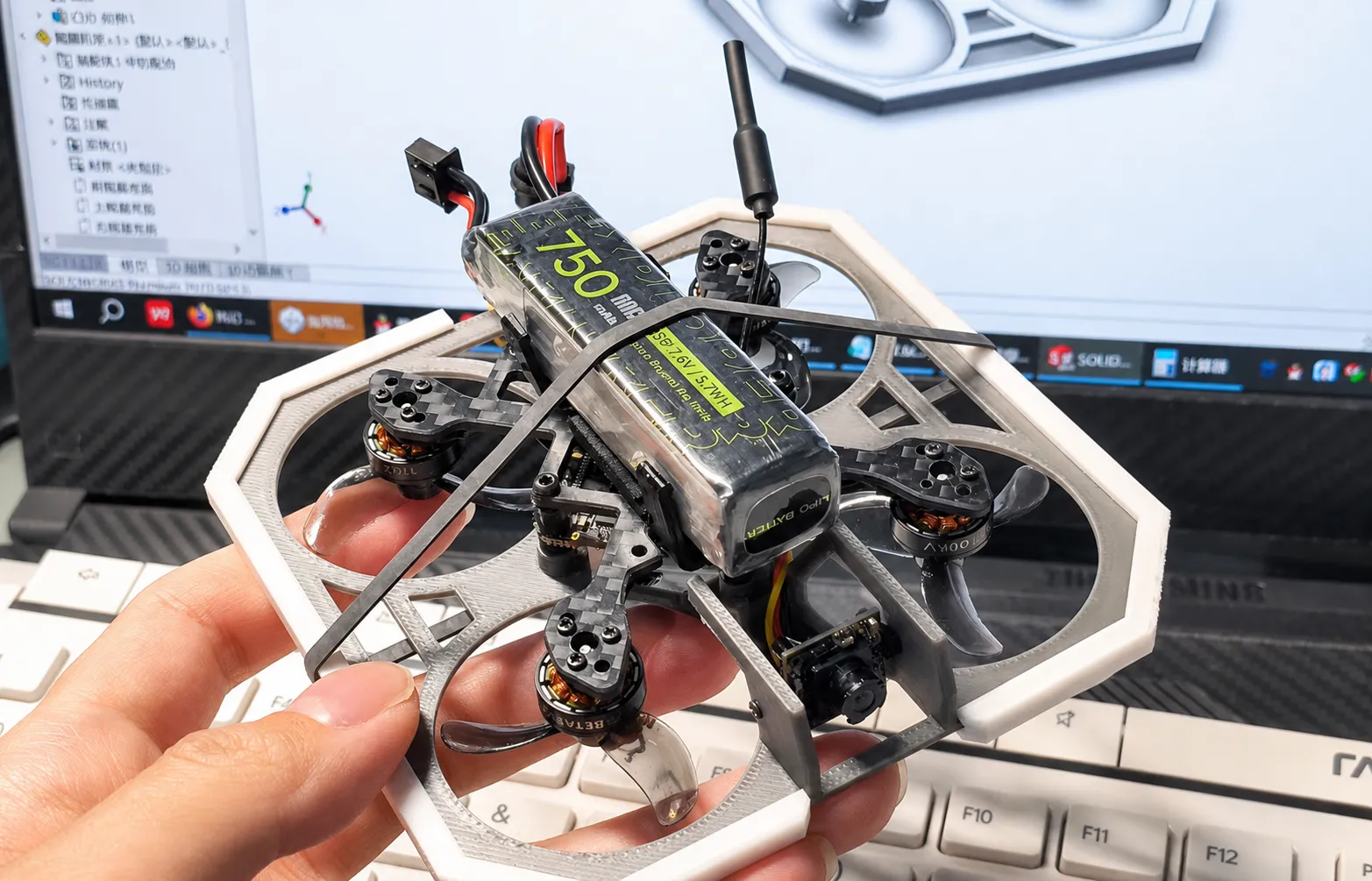
The aerospace and drone industries demand materials that combine lightweight performance, dimensional accuracy, and exceptional mechanical strength. Whether developing next-generation unmanned aerial vehicles (UAVs), aircraft prototypes, or custom engineering fixtures, manufacturers need reliable materials capable of meeting demanding performance requirements while accelerating product development.
FDM 3D printing has become an essential manufacturing solution for aerospace engineers, drone manufacturers, research laboratories, and engineering companies. Compared with traditional machining and injection molding, additive manufacturing significantly reduces production time, lowers development costs, and enables highly complex geometries that would otherwise be difficult or impossible to manufacture.
At Felarus, we provide industrial-grade 3D printing filaments designed to support rapid prototyping, functional testing, tooling, and end-use applications. From lightweight structural components to durable engineering prototypes, our materials help aerospace professionals innovate faster while maintaining exceptional print quality and reliability.
Whether your project involves UAV development, aircraft interior components, maintenance tooling, or advanced engineering research, Felarus offers dependable filament solutions tailored for demanding aerospace environments.
Why 3D Printing Is Transforming Aerospace & Drone Manufacturing
The aerospace industry has always been driven by innovation. Every gram of weight saved contributes to improved fuel efficiency, increased payload capacity, and better overall performance. Meanwhile, drone manufacturers face constant pressure to create lighter, stronger, and more efficient products while reducing production costs.
Traditional manufacturing methods often require expensive tooling, long lead times, and complex machining processes. In contrast, 3D printing enables engineers to rapidly design, test, modify, and manufacture components in hours instead of weeks.
Key Advantages
- Rapid design validation before mass production
- Lightweight structures through optimized geometry
- Lower development costs for prototypes
- Faster product iteration
- Custom parts for specialized applications
- Reduced inventory through on-demand manufacturing
- Complex internal structures that conventional machining cannot easily produce
As aerospace companies continue adopting additive manufacturing, engineering-grade filaments have become essential materials for both prototyping and functional production.
Why FDM for Aerospace?
FDM is especially valuable for aerospace and UAV projects because it gives engineering teams a practical path from early concept to functional part without waiting for tooling. It supports design freedom, material flexibility, and fast iteration while keeping production accessible for prototypes, fixtures, and low-volume specialized components. For broader factory use cases, see our industrial manufacturing filament solutions.
Faster Engineering Cycles
Teams can print, test, revise, and reprint parts quickly, helping shorten validation cycles for UAV frames, housings, brackets, and aerodynamic models.
Lightweight Part Design
Hollow structures, ribs, lattice-style reinforcement, and topology-inspired geometry can reduce weight while preserving useful strength.
Engineering Material Access
FDM supports practical use of PC, PA6-CF, PETG-CF, ASA, ABS, TPU, and other thermoplastics for real-world functional testing.
On-Demand Production
Maintenance tools, custom adapters, inspection gauges, and replacement parts can be produced when needed, reducing downtime and inventory pressure.
Typical Aerospace & Drone Applications
Felarus materials are suitable for a wide variety of aerospace and UAV applications.
UAV Frames & Structural Components
Drone manufacturers require lightweight yet rigid structures capable of supporting motors, batteries, sensors, and cameras while maintaining flight stability. PA6-CF and PETG-CF carbon fiber filaments provide an excellent balance of lightweight performance, rigidity, and mechanical strength for demanding UAV applications.
Typical parts include:
- Drone frames
- Arm structures
- Landing gear
- Camera mounts
- Battery holders
- Motor brackets
Functional Engineering Prototypes
Before investing in expensive tooling, aerospace engineers rely on 3D printing to validate product designs.
Applications include:
- Aerodynamic models
- Wind tunnel testing
- Functional assemblies
- Design verification
- Mechanical testing
- Prototype validation
Rapid prototyping shortens product development cycles while minimizing engineering costs.
Aircraft Interior Components
Aircraft cabins contain numerous customized plastic components that benefit from additive manufacturing.
Examples include:
- Cable guides
- Mounting brackets
- Air ducts
- Protective covers
- Instrument housings
- Customized fixtures
These components often require excellent dimensional stability together with lightweight construction.
Manufacturing Fixtures & Tooling
Production lines increasingly utilize 3D printed tooling to improve manufacturing efficiency.
Common tooling includes:
- Assembly jigs
- Positioning fixtures
- Inspection gauges
- Drilling guides
- Welding supports
- Quality control fixtures
Customized tooling reduces production downtime while improving manufacturing accuracy.
Electronic Enclosures
Modern drones integrate GPS modules, flight controllers, communication systems, and various sensors.
3D printing enables rapid production of:
- Sensor housings
- Flight controller cases
- GPS enclosures
- Antenna mounts
- Control boxes
- Protective covers
Spare Parts & Maintenance
Maintenance teams often require replacement components that are no longer available or difficult to source.
FDM printing allows fast production of:
- Replacement brackets
- Maintenance tools
- Custom adapters
- Repair fixtures
- Equipment accessories
This significantly reduces aircraft and equipment downtime.
Recommended Materials for Aerospace & Drone Projects
Selecting the appropriate material is critical for achieving optimal performance. Different aerospace and UAV applications require different balances of strength, stiffness, heat resistance, dimensional accuracy, outdoor durability, and flexibility. For more general material selection guidance, read our guide on choosing PLA+, PETG, and TPU materials.
PC - High-Strength Engineering Material
Polycarbonate (PC) is widely used in aerospace engineering thanks to its excellent strength, heat resistance, and dimensional stability.
Ideal for:
- Functional engineering parts
- Aircraft interior components
- Structural brackets
- High-temperature applications
- Precision engineering prototypes
Advantages:
- Outstanding mechanical strength
- Excellent heat resistance
- High impact resistance
- Superior dimensional stability
- Reliable long-term durability
PA6-CF - Lightweight Engineering Material
PA6-CF carbon fiber filament combines the toughness of nylon with the rigidity of carbon fiber reinforcement, making it an ideal material for lightweight aerospace structures and UAV components.
Ideal for:
- UAV frames
- Structural brackets
- Mechanical assemblies
- Engineering prototypes
- Lightweight functional parts
Advantages:
- High stiffness and rigidity
- Excellent mechanical strength
- Lightweight performance
- Good heat resistance
- Outstanding dimensional stability
- Reduced warping during printing
PETG-CF
PETG-CF provides enhanced rigidity while maintaining excellent printability, making it suitable for engineering prototypes and functional parts. For applications where carbon fiber reinforcement is not required, PETG filament remains a practical engineering material for durable prototypes and fixtures.
Ideal for:
- Mechanical components
- Functional prototypes
- Mounting brackets
- Engineering fixtures
Advantages:
- Higher stiffness than standard PETG
- Excellent dimensional accuracy
- Easy printing
- Strong layer adhesion
ASA
Outdoor UAVs operate under sunlight, rain, and changing weather conditions. ASA provides UV resistance, weather resistance, excellent outdoor durability, stable color retention, and high impact strength.
Ideal for:
- Drone shells
- Outdoor enclosures
- Protective covers
- Exterior components
ABS
ABS remains one of the most versatile engineering materials for aerospace prototyping.
Applications include:
- Functional prototypes
- Electronic housings
- Assembly fixtures
- Engineering models
Benefits include:
- Good mechanical strength
- Easy post-processing
- Excellent machinability
- Cost-effective production
TPU
Flexible components are increasingly required in modern drone systems. TPU flexible filament is ideal for landing pads, protective bumpers, shock absorbers, flexible mounts, and cable protection. Its excellent elasticity helps absorb vibration during operation.
Material Comparison
The matrix below provides a practical comparison of common Felarus materials for aerospace and drone projects. Ratings are application-oriented guidelines; final material selection should always consider part geometry, printer conditions, load requirements, safety factors, and testing standards. Before scaling a new material into production, our article on sample testing filament suppliers can help reduce qualification risk.
| Property | PC | PA6-CF | PETG-CF | ASA | ABS | TPU |
|---|---|---|---|---|---|---|
| Mechanical strength | ||||||
| Stiffness | ||||||
| Heat resistance | ||||||
| Dimensional stability | ||||||
| Outdoor durability | ||||||
| Shock absorption | ||||||
| Printability |
Quick Material Selection Guide
| Application Need | Recommended Material | Why It Fits |
|---|---|---|
| Lightweight UAV structure | PA6-CF, PETG-CF | High stiffness, strong dimensional stability, and weight-saving performance. |
| High-strength functional prototype | PC, PA6-CF | Excellent strength, heat resistance, and durability for engineering validation. |
| Outdoor drone shell or enclosure | ASA | Strong UV resistance, weather resistance, and long-term outdoor durability. |
| Cost-effective engineering model | ABS, PETG-CF | Practical mechanical performance with manageable production cost. |
| Flexible or vibration-damping part | TPU | Elasticity helps absorb shock and protect sensitive drone assemblies. |
What Aerospace Engineers Look for in 3D Printing Materials
Choosing the right filament involves much more than printability. Aerospace engineers evaluate materials based on real-world mechanical performance.
Lightweight Design
Reducing component weight improves fuel efficiency, increases payload capacity, and enhances flight performance.
Mechanical Strength
Materials must withstand continuous stress, vibration, and operational loads.
Dimensional Accuracy
Precision is essential for assemblies requiring tight tolerances and repeatable manufacturing.
Heat Resistance
Certain aerospace environments involve elevated operating temperatures where ordinary plastics may deform.
Chemical Resistance
Components may come into contact with lubricants, fuels, cleaning chemicals, or industrial solvents.
Fatigue Resistance
Repeated loading cycles require materials capable of maintaining long-term structural integrity.
Reliable Print Consistency
Industrial users demand consistent diameter tolerance, stable extrusion, and repeatable print quality.
Excellent Surface Finish
Professional prototypes and customer presentations require smooth, attractive surface quality with minimal post-processing.
Why Choose Felarus for Aerospace Applications
At Felarus, we understand that engineering applications demand more than simply producing successful prints. Consistency, reliability, and material performance are essential for every project.
We provide:
- High-quality raw materials and controlled production processes, as explained in our guide to how premium 3D printer filament is made
- Strict diameter tolerance control
- Stable extrusion performance
- Excellent layer adhesion
- Consistent batch quality
- Industrial-grade engineering filaments
- OEM & ODM manufacturing services, including private-label preparation support for long-term partners
- Reliable global supply chain
- Professional technical support from material recommendation to project consultation
- Worldwide shipping
Whether you are developing commercial UAVs, conducting aerospace research, or manufacturing engineering fixtures, Felarus delivers dependable materials designed for demanding industrial environments. If you are evaluating long-term supply, our guide on how to evaluate a reliable filament supplier is a useful checklist.
FELARUS FAQ
Frequently Asked Questions
Practical answers for aerospace engineers, UAV manufacturers, research teams, and industrial buyers choosing reliable 3D printing materials.
What is the best filament for drone frames?
PA6-CF is one of the best materials for drone frames because it offers an excellent combination of lightweight performance, high stiffness, and outstanding mechanical strength. For applications requiring greater impact resistance or heat resistance, PC is also an excellent choice.
Is PLA suitable for aerospace applications?
PLA and PLA+ are suitable for concept models and visual prototypes but are generally not recommended for structural or high-performance aerospace components due to lower heat resistance and mechanical durability.
Which material is best for outdoor drones?
ASA is an excellent option for outdoor drone components because it offers outstanding UV stability, weather resistance, and long-term durability.
Can carbon fiber reinforced filaments replace metal parts?
For many lightweight engineering applications, PA6-CF can replace certain aluminum components while significantly reducing weight. However, material selection should always be based on engineering load requirements and safety standards.
Which filament is recommended for functional aerospace prototypes?
PC, PA6-CF, PETG-CF, ABS, and PETG are commonly used for functional aerospace prototypes, depending on the required balance of strength, weight, heat resistance, and dimensional accuracy.
Partner with Felarus for Aerospace Innovation
From concept development to functional production, Felarus provides high-performance 3D printing materials that help aerospace engineers and drone manufacturers build lighter, stronger, and more efficient components.
Whether you are producing UAV frames, engineering prototypes, manufacturing fixtures, or customized aerospace parts, our industrial-grade filaments deliver the consistency, precision, and reliability required for demanding applications.
Contact Felarus today to discuss your project, request material recommendations, or order samples to experience the performance of our aerospace-ready 3D printing materials.