Manufacturing a spool of 3D printer filament involves more than buying resin and running an extrusion line. For wholesale buyers, print farms and private-label brands, the real factory cost includes polymer, additives, drying, extrusion, diameter control, winding, quality inspection, packaging, production loss, labor and factory overhead. The retail price seen on a marketplace is a different number. It also includes channel margin, promotion, platform fees, logistics and the seller's operating cost.
That difference matters. A distributor comparing wholesale 3D printer filament manufacturing cost is not asking the same question as a hobby user comparing shelf prices. A print farm wants to know the cost per successful print. A private-label brand wants to know how custom colors, barcode labels, retail boxes and repeat-order consistency affect the quote. An industrial buyer cares about material grade, tolerance control and documentation. As a China-based OEM 3D printer filament manufacturer, Felarus works with distributors, e-commerce brands, print farms and private-label buyers that need stable PLA, PETG, TPU and engineering-filament supply rather than one-time low-price stock.
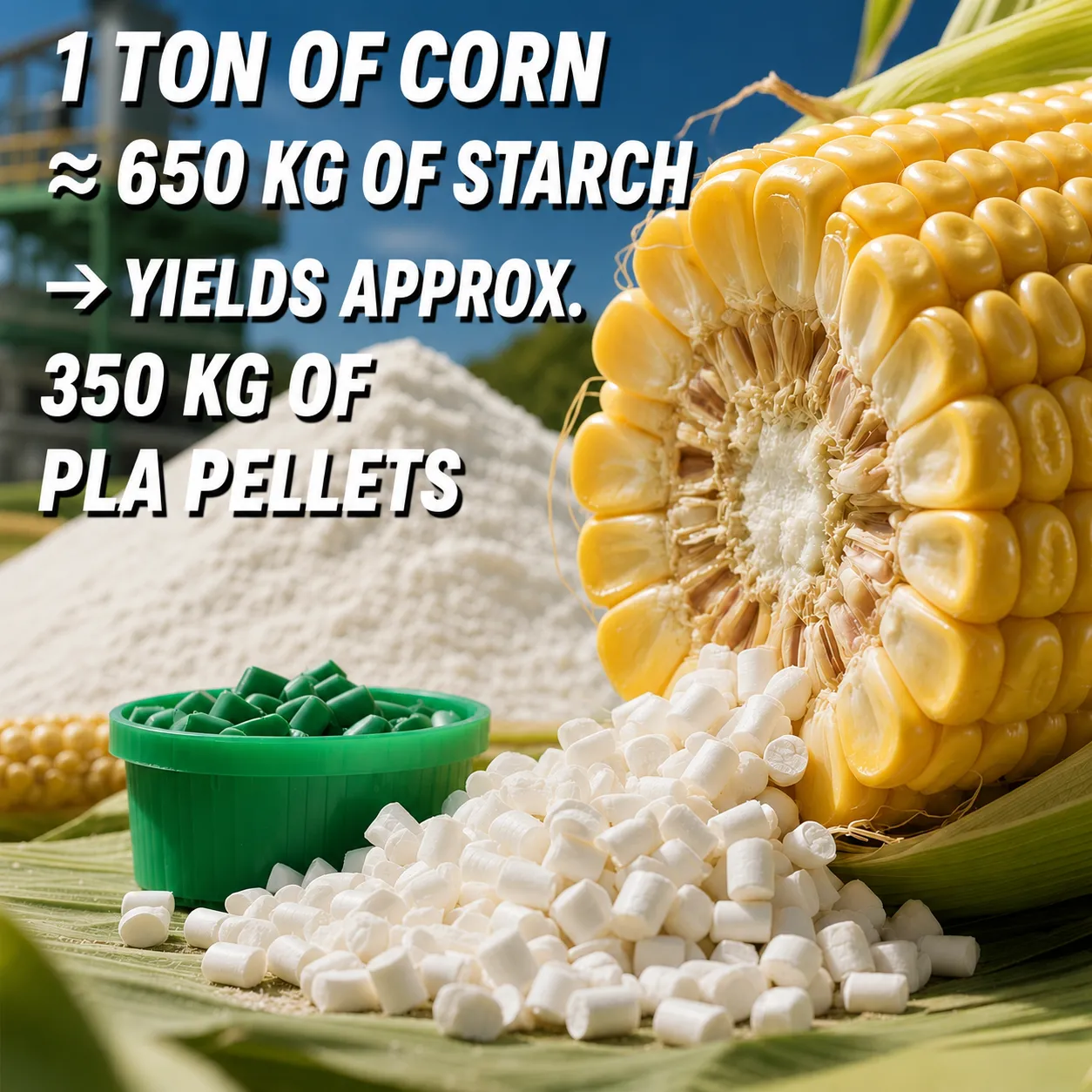
What Costs Are Included in 3D Printer Filament Manufacturing for Bulk Buyers?
The first step is separating factory manufacturing cost from ex-factory price, landed cost and retail price. Manufacturing cost ends when qualified filament is produced, inspected and packed. Marketplace commissions, advertising, influencer promotion and retail margins belong to the final selling-price structure, not the physical filament production process.
Direct material cost covers PLA resin, color masterbatch, toughening agents, antioxidants, flow modifiers and special-effect additives. Direct labor includes batching, feeding, equipment operation, winding, inspection and packing. Manufacturing overhead includes electricity, drying equipment, extrusion-line depreciation, maintenance, warehouse handling, production management and process loss. Packaging is partly manufacturing-related because the finished spool must be protected by a spool, vacuum bag, desiccant, label, color box or outer carton. International freight, destination duties and last-mile delivery are separate sourcing calculations.
| Cost Layer | What It Includes | Main Decision Maker |
|---|---|---|
| Manufacturing cost | Materials, processing, labor, QC, packaging and production loss | Factory |
| Ex-factory price | Manufacturing cost plus factory margin | Wholesalers and OEM buyers |
| Landed cost | Product, international freight, duties, tax and local handling | Importers and distributors |
| Retail price | Landed cost, platform cost, advertising and retail margin | End users and e-commerce sellers |
How Is PLA Filament Manufactured for Wholesale and OEM Production?
A serious cost breakdown should follow the factory process. PLA pellets are inspected by batch, dried before production, mixed with color masterbatch or additives, melted through an extrusion system, cooled, pulled through diameter control, wound onto spools, checked by weight and appearance, then vacuum packed. For PLA filament manufacturing cost for 1 kg wholesale spools, each step creates a different cost signal.
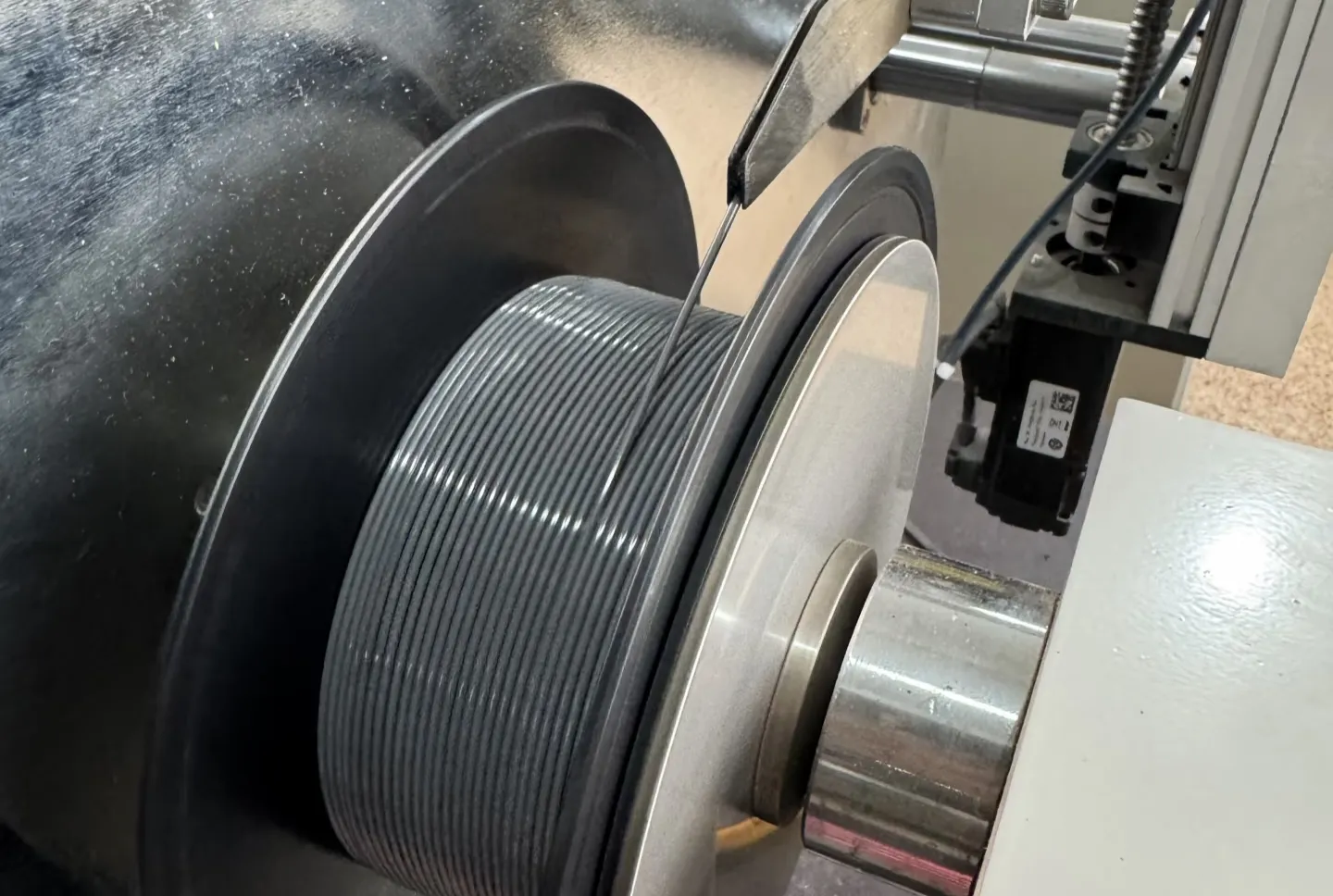
Felarus factory experience shows that moisture control and diameter monitoring are not optional details. Vacuum packaging helps protect finished filament during storage, but it cannot replace pre-production drying. Likewise, checking one short sample does not prove the entire spool is stable. The line needs coordinated control of temperature, pull speed, cooling and winding tension so the filament remains printable from the first meter to the last.
PLA Filament Manufacturing Cost Breakdown for 1 kg Wholesale Spools
For most standard PLA programs, raw materials are usually the largest cost component. That does not mean resin price alone determines the final value of a spool. A low resin price can be offset by higher breakage, unstable flow, poor color repeatability or more failed prints. A professional PLA filament manufacturing cost breakdown for distributors should show two layers: factory-related cost and the final selling-price model.
Example 1: Factory-Related Cost Structure for OEM PLA Filament Orders
| Factory Cost Item | Example Share Range | What It Covers |
|---|---|---|
| PLA resin, color masterbatch and additives | 45%-60% | Base resin, colorants, toughening agents and modifiers |
| Extrusion, energy and equipment | 12%-20% | Drying, heating, extrusion, cooling and machine depreciation |
| Labor and quality control | 8%-15% | Operation, inspection, weighing, records and print testing |
| Spool and packaging | 8%-15% | Spool, vacuum bag, desiccant, label, box and carton |
| Loss and manufacturing overhead | 5%-12% | Color changeover, cleaning, rejected material, storage and maintenance |
These ranges are illustrative, not a universal industry standard. Actual costs vary by resin grade, formulation, order quantity, packaging, quality-control requirements and production schedule.
Example 2: RMB 50 Retail PLA Spool Price Structure
A RMB 50 PLA spool can be useful as an example, but it should be defined as an illustrative final selling-price model, not the universal factory cost of producing one kilogram of PLA filament. In one simplified model, raw materials may account for around RMB 24, extrusion and winding around RMB 9, packaging and part of logistics around RMB 4.5, formula development and testing amortization around RMB 4, warehouse, depreciation and loss around RMB 3, and channel, promotion and selling cost around RMB 5.5.
If raw materials account for around 48% of the final selling price, a 10% increase in resin and additive cost would theoretically raise the total by about 4.8%, assuming all other costs remain unchanged. It should not be described as a fixed 10% or 25% production-cost increase.
How Raw Material Grade Affects PLA Filament Cost for Distributors and Print Farms
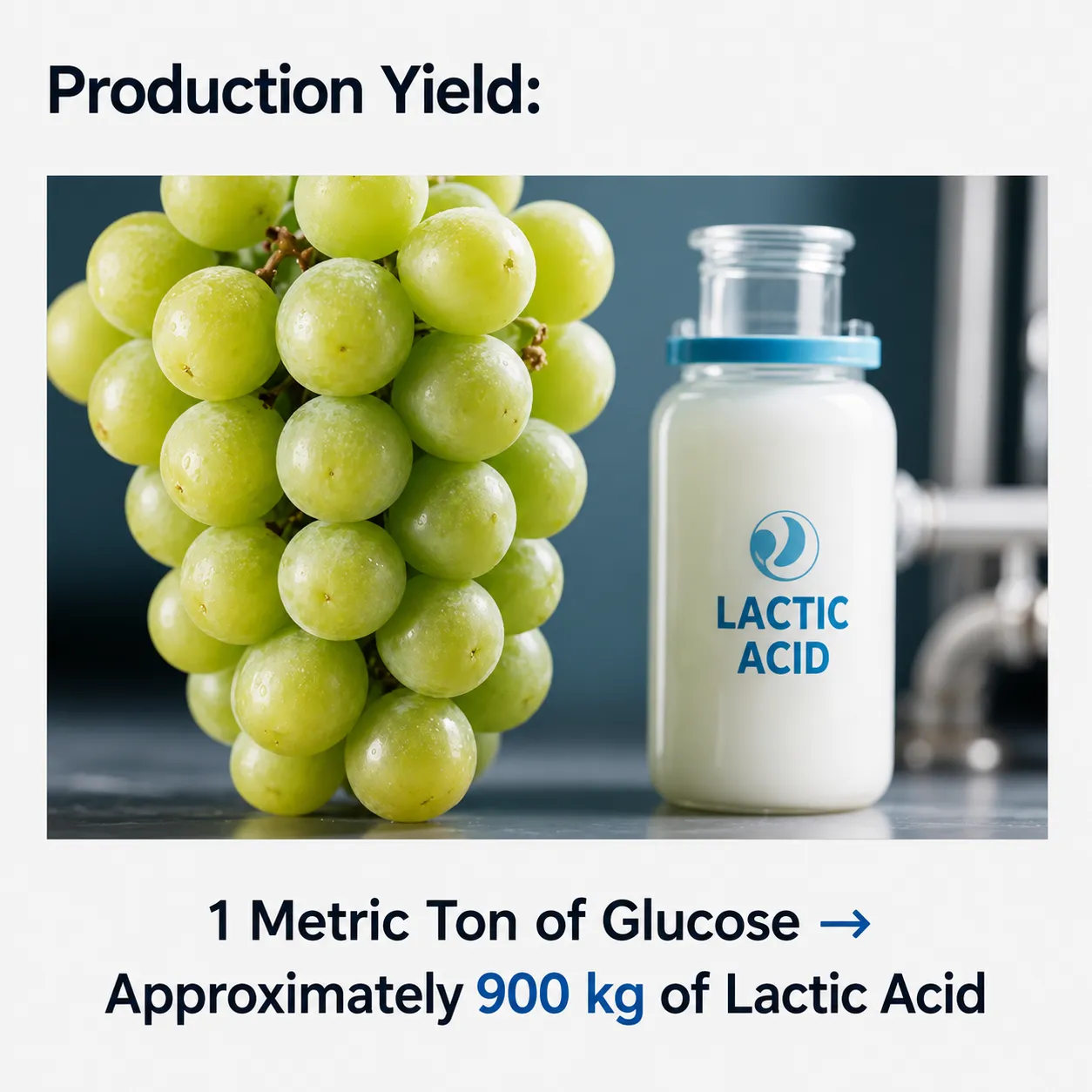
PLA is often described as an easy material, but not every PLA pellet grade behaves the same. Standard PLA resin is suitable for visual models, education, hobby printing, high-volume retail stock and many print farm applications. Modified PLA and OEM PLA and PLA+ filament may use additive packages designed for toughness, higher flow, stronger layer bonding or high-speed printing. Depending on the base resin, additive package, purchasing volume and performance target, modified PLA formulations may cost noticeably more than standard general-purpose PLA resin.
Special-effect PLA adds another layer. Silk PLA filament for decorative models, matte PLA, rainbow PLA, dual-color PLA, tri-color PLA and luminous PLA do not only add pigment or effect powder. They also add color matching, sample extrusion, cleaning during color changeover, SKU management and batch-to-batch color control. For a retail brand, the premium is not only the material. It is the factory work required to keep the visual effect repeatable across purchase orders.
PLA vs PETG vs TPU vs Carbon Fiber Manufacturing Cost for Material Buyers
Material choice changes the entire cost model. A buyer sourcing low-cost PLA filament for educational kits should not use the same benchmark as a buyer sourcing carbon fiber nylon filament for engineering fixtures. Resin cost, moisture sensitivity, line speed, winding control, drying time and tool wear all affect the cost per qualified spool.
| Material | Raw Material Cost | Processing Difficulty | Moisture Management | Typical Application | Relative Cost |
|---|---|---|---|---|---|
| Standard PLA | Models, prototypes, retail stock | $ | |||
| PLA+ | Functional prototypes, print farms | $$ | |||
| PETG | Jigs, housings, functional parts | $$ | |||
| Silk / Matte PLA | Decorative models, gifts, retail brands | $$ | |||
| TPU | Flexible components, protective parts | $$$ | |||
| PA6-CF / PETG-CF | Fixtures, tooling, engineering parts | $$$$ |
PLA supports mature high-volume production. PETG requires stronger drying discipline and processing control. TPU can slow the line because winding and tension control are more sensitive. Carbon fiber materials increase formulation cost, equipment wear and testing requirements. Felarus supports material selection across PLA, PETG, TPU and carbon fiber filament programs, so buyers can compare cost by application rather than judging every project by PLA pricing.
How Order Quantity Changes Filament Cost for Wholesale and Private-Label Buyers
Order volume changes cost, but not in a straight line. Sample orders and market-testing orders carry higher unit costs because the factory may need separate setup, formula sampling, color changeover, small-batch label printing, cleaning and manual handling. A standard wholesale order spreads setup, color matching, package preparation, testing and document handling across more units.
Large OEM and private-label programs can reduce the cost per qualified spool, but they do not make material cost disappear. Resin, spool, packaging, quality control, special additives and shipping remain variable costs. In some cases, a large order with many colors, several net weights and different retail boxes is more complex than a smaller single-SKU order. This is why serious buyers ask for a costed quote instead of only pushing for the lowest price per kilogram.
Neutral Packaging vs Private-Label Packaging Cost for Filament Brands
Packaging should be separated from logistics. Neutral factory packaging usually includes a standard spool, neutral label, vacuum bag, desiccant and plain box or carton. It is suitable for sample testing, print farms, industrial users and early market validation. Custom-label packaging adds spool stickers, product labels, barcode information and brand logo. Full private-label retail packaging may add custom color boxes, multilingual instructions, Amazon labels, QR codes, custom cartons, special spools and independent visual design.
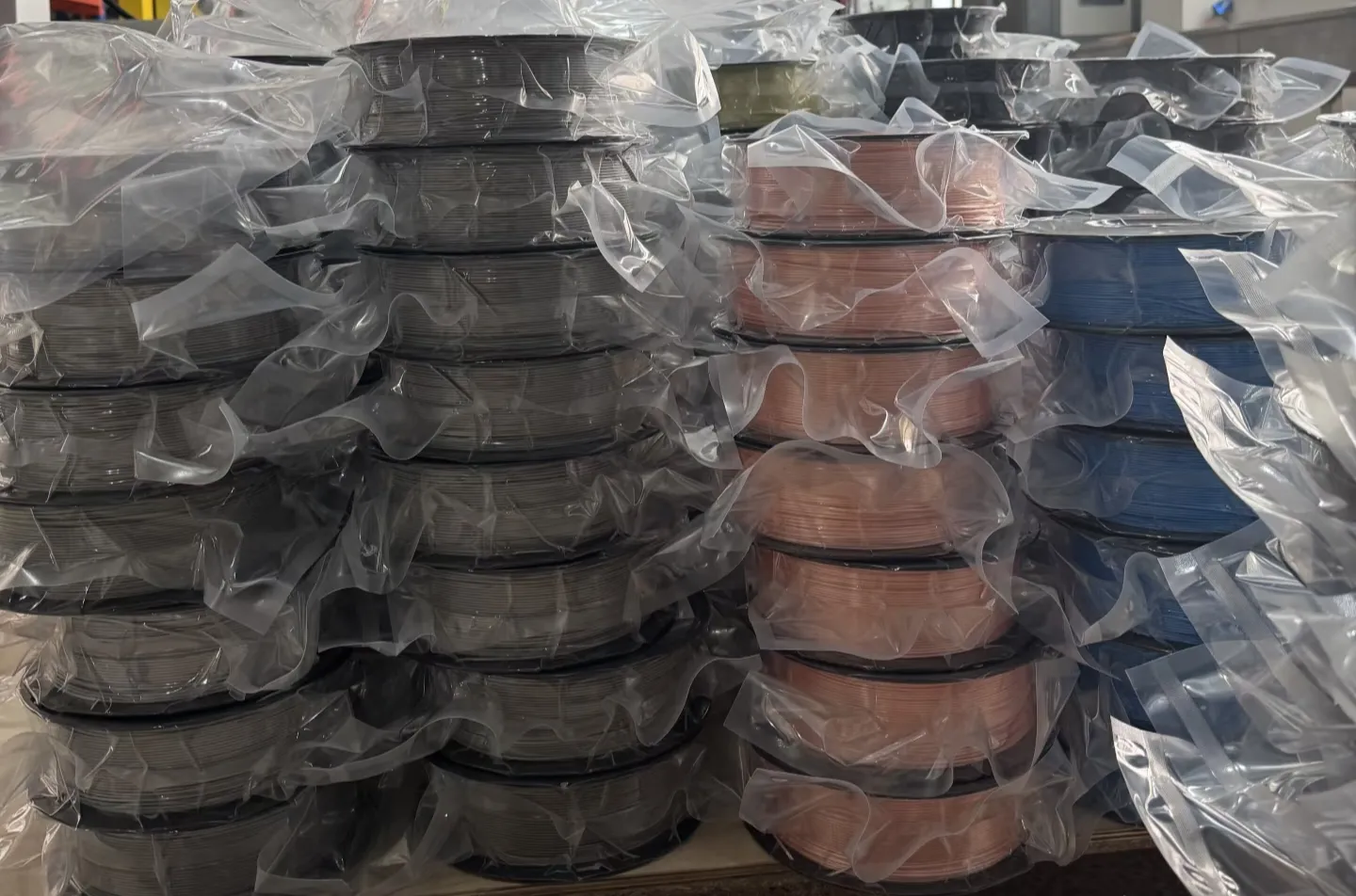
| Packaging Type | Upfront Work | Unit Cost | Brand Display | Best Fit |
|---|---|---|---|---|
| Neutral packaging | Low | Low | Low | Samples, print farms, industrial use |
| Custom label | Low | Low to medium | Medium | New brands and e-commerce sellers |
| Custom color box | Medium | Medium | High | Distributors and retail brands |
| Full private label | High | Medium to high | Very high | Mature brands and large programs |
Felarus OEM service can support custom colors, brand labels, spool stickers, vacuum packaging and retail packaging. Buyers planning a private label PLA filament packaging cost for retail brands should send artwork needs, label requirements and target market information together with material and quantity.
Why Cheap Filament Can Cost More for Print Farms, Retailers and Distributors
A low purchase price does not always create a low total cost of use. For print farms, hidden cost appears as failed prints, machine downtime, repeated parameter tuning, nozzle clogging, wasted material and delivery delays. For distributors, it appears as returns, poor reviews, color inconsistency, leaking vacuum bags, customer-service labor and inventory that cannot be replenished with the same batch quality.
The practical formula is simple: true filament cost = purchase cost + failed print waste + labor + downtime + customer-service cost. This is why print farm filament supplier cost per successful print is often a better procurement keyword than "cheap PLA spool." A verified factory program may not be the lowest quote on paper, but it can reduce the cost of failed output. The Felarus guide on brand-name vs generic filament explores this same question from the user's side: price only matters after the filament can print reliably.
Cheap Unverified Filament
Low purchase price can be offset by high waste, downtime, inconsistent color, blocked nozzles and customer complaints.
Quality-Controlled OEM Filament
A slightly higher unit price may reduce failed prints, after-sales labor and repeat-order risk for B2B buyers.
Felarus China Factory Experience in Controlling PLA Filament Manufacturing Cost
Cost control inside a filament factory is not only negotiation with resin suppliers. In Felarus production experience, stable resin and stable color masterbatch matter more than chasing a one-time low material price. Changing resin grade may affect print temperature, flow behavior, surface finish, toughness, color and batch consistency. If the first sample prints well but the second batch changes, the buyer's real cost rises through complaints, retesting and delayed selling.
Diameter consistency also requires continuous monitoring. It is not enough to measure a few points after production. Extrusion temperature, pull speed, cooling and winding tension must work together. Felarus publicly presents raw material verification, extrusion monitoring, diameter inspection, vacuum packaging and print-performance testing as part of its China 3D printer filament factory workflow. That matters for long-term B2B buyers because repeatability is where factory capability becomes visible.
Custom color development creates hidden work that buyers may not see: color sample confirmation, trial matching, small-batch extrusion, print observation, formula adjustment, cleaning, repeat color matching and sample records. For OEM filament manufacturing cost for private label 3D printing brands, that work should be discussed early. A supplier that ignores it may quote quickly, but the risk returns later as color drift, longer lead time or unstable replenishment.
How to Request an Accurate OEM Filament Manufacturing Quote
An accurate filament quotation should be based on material, formulation, color, packaging, volume, quality requirements and delivery terms, not only a generic price per kilogram. Before asking for an OEM quote, prepare the material, diameter, net weight, quantity, number of colors, standard or Pantone color requirements, packaging style, spool type, target market, certificate or testing needs, destination country, trade terms such as EXW, FOB, CIF or DDP, sample requirements and expected repeat-order volume.
With those details, a factory can separate material quotation, packaging plan, sample cost, MOQ, lead time, freight option and private-label recommendation. If you need a specific cost estimate for wholesale PLA, PETG, TPU or engineering filament, contact Felarus with your target application and purchasing plan. If you are still comparing material choices, start from the Felarus filament product range and shortlist the materials that match your market.
FELARUS FAQ
Frequently Asked Questions
Practical answers for wholesale buyers, print farms and private-label brands comparing filament factory quotations.
How much does it cost to manufacture one kilogram of PLA filament?
There is no single universal number. The cost depends on resin grade, additives, order quantity, color, packaging, QC standard, production loss and factory overhead.
Is a RMB 50 PLA spool expensive to manufacture?
RMB 50 should be treated as an illustrative final selling price, not a factory manufacturing cost. Retail price can include channel cost, promotion, platform fees and seller margin.
What is the largest cost in PLA filament manufacturing?
Raw material is often the largest component, especially PLA resin, color masterbatch and modification additives. The exact share changes with formulation and order scale.
Why does PLA+ cost more than standard PLA?
PLA+ may require toughening, flow modification, more performance testing and tighter batch control. The added cost comes from both materials and process management.
Does a larger wholesale order reduce the price per spool?
Usually yes, because setup, color changeover, packaging preparation and testing can be spread across more units. Resin, packaging and QC costs still remain.
How much does private-label packaging add to filament cost?
It depends on labels, boxes, spool type, printing quantity, barcode requirements, artwork complexity and whether the buyer needs full retail packaging or only a branded sticker.
Is recycled PLA cheaper to manufacture?
Recycled raw material may cost less to purchase, but filtration, impurity control, color stability and mechanical performance must also be considered before comparing quotes.
How can buyers compare two filament factory quotations?
Compare resin grade, net weight, tolerance, packaging, sample print results, defective-product policy, payment terms, shipping method, OEM scope and repeat-order support.
Final Takeaway
The True Cost of Filament Manufacturing Goes Beyond Raw Materials
Raw material is usually the largest cost component, but resin price alone does not determine the cost or value of a filament spool. Drying, extrusion stability, diameter control, winding, packaging, batch testing, production loss and repeat-order consistency all affect the cost of producing filament that can be reliably sold and printed. For distributors, print farms and private-label brands, the best quote is not simply the cheapest number. It is the quote that matches the material, application, packaging and repeat-order plan.